If you study with an online Chinese teacher or using a platform to learn Mandarin online, you will already have come across loads of food vocabulary around Chinese New Year. Spring Festival is the most food-intensive period in the Chinese calendar, and there are certain dishes associated with it. They are very important for luck, prosperity, family and the relationship between what is eaten and what is hoped for in the coming year. Let’s understand these customs more in detail below.
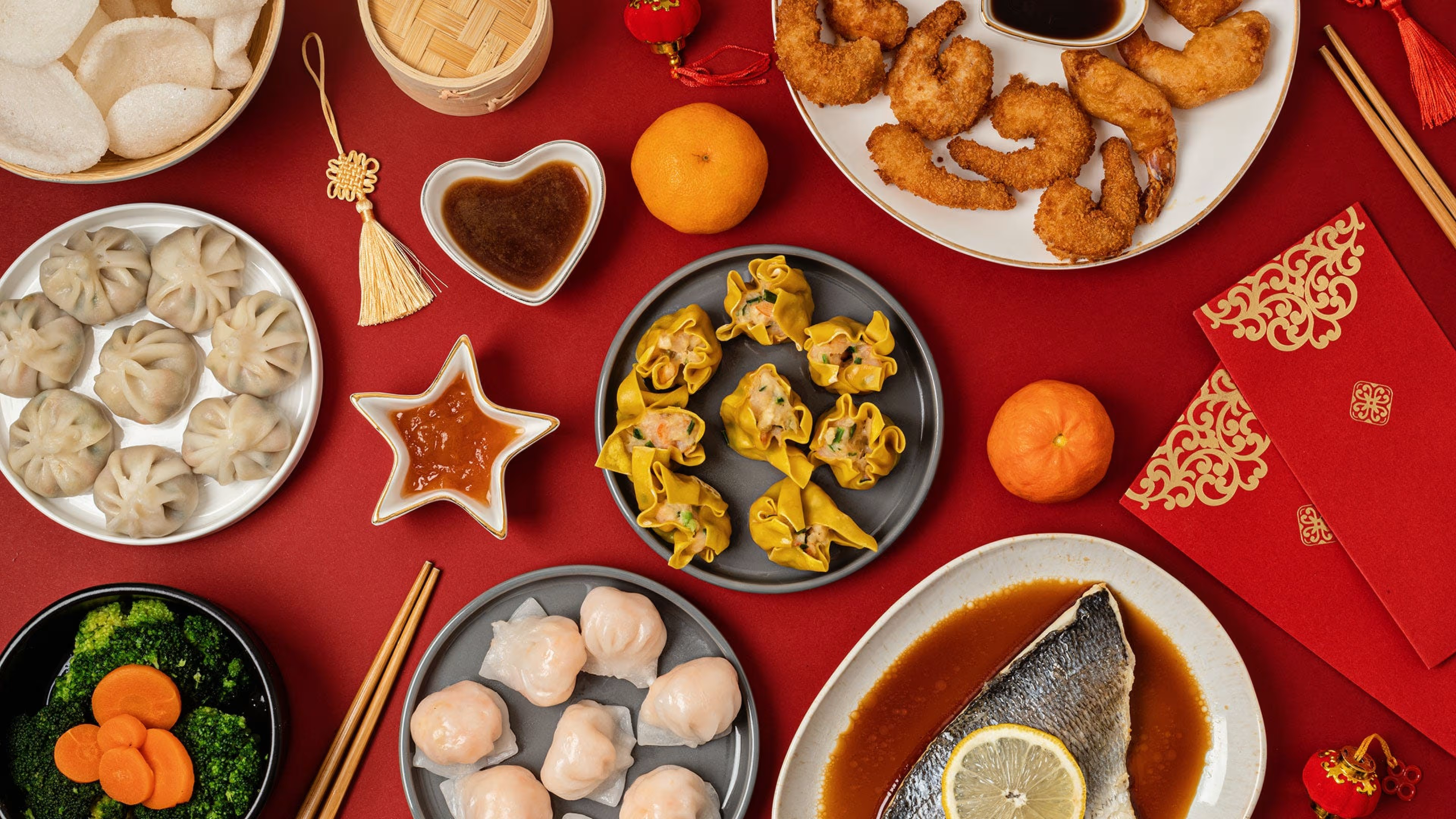
Firstly, the practice of selecting foods whose names sound like auspicious words in Mandarin or in local dialects is very common! This is not superstition in a simple sense. It is a culturally embedded form of wordplay that runs through Chinese linguistic culture at every level, and New Year food is one of its most systematic expressions. For example, fish is perhaps the most universal New Year food across China. It appears on virtually every regional reunion dinner table, always served whole — head and tail intact — because the wholeness of the fish symbolises completeness and good beginning and ending to the year. The critical factor is that the Mandarin word for fish, yú (鱼), is a homophone of the word for surplus or abundance, yú (余).
Dumplings, known as jiǎozi (饺子), are the defining New Year food of northern China and represent one of the clearest regional divisions in Chinese food culture. In Beijing, Hebei, Shandong, Shanxi and across the northeastern provinces, dumplings are eaten at midnight on New Year’s Eve, timed to coincide with the transition between the old and new year. Their shape, which resembles the gold ingots used as currency in imperial China, is understood to symbolise wealth.
In southern China, by contrast, dumplings are not a New Year staple, and the foods that occupy equivalent symbolic importance are entirely different. In Guangdong, the reunion dinner centres on dishes whose Cantonese names carry auspicious meanings that do not always translate into Mandarin. Whole steamed fish with ginger and scallion is present, as in the north, but the supporting cast differs substantially. Fǎ cài (发菜), a type of black hair-like algae, appears in Cantonese New Year cooking because its name in Cantonese sounds like fā cái, meaning to prosper or get rich, a phrase so closely associated with New Year greetings that it appears in the standard Cantonese festival greeting gōng xǐ fā cái. Oysters dried and rehydrated, known as hāo sǐ (好事) in Cantonese, invoke the phrase for good things happening. The layering of phonetic symbolism in a formal Cantonese New Year dinner is, in this sense, more elaborate and dialect-specific than its northern equivalent.
Niángāo (年糕), the glutinous rice cake eaten across many regions of China at New Year, is one of the few foods with genuinely national distribution during the festival, though its form and preparation vary considerably by region. In the north it tends to be fried. In the south it is more commonly steamed or used in soups. In Shanghai it appears in a stir-fry with pork and vegetables. Its symbolic logic is consistent across all these preparations: nián (年) means year, and gāo (糕) is a homophone of the word for high or tall, making the dish an edible expression of the wish to rise higher in the coming year than in the one just passed.
Some Chinese language teaching institutions like GoEast Mandarin in Shanghai incorporate New Year food vocabulary and the phonetic symbolism underlying it into their cultural curriculum, as linguistic knowledge and cultural understanding reinforce each other. A student who understands why fish is served whole, why dumplings are eaten at midnight in Beijing, and why a Cantonese host places black algae on the table is not merely accumulating food trivia. They are developing culturally grounded linguistic awareness!