For a long time, observability has been treated as a visibility problem. If you could see enough, measure enough, and track enough, you could manage systems effectively. That belief drove an explosion of dashboards, alerts, and monitoring tools.
Now, something interesting is happening. Teams are starting to realise that visibility alone is not solving their biggest challenges. In some cases, it is making things harder.
The issue is not a lack of data. It is knowing what to do with it.
Why More Data Has Not Led to Better Decisions
Walk into most engineering or operations teams today and you will find no shortage of dashboards. Metrics are everywhere.
Latency graphs, error rates, infrastructure health, service dependencies. Everything is being tracked.
Yet when something breaks, the response often looks the same. Teams jump between tools, compare conflicting signals, and spend time trying to agree on what is actually happening before they can decide what to do.
According to Gartner, organisations are increasingly facing what is described as an “insight gap” where the volume of telemetry exceeds the ability to interpret it effectively. This is not a tooling issue. It is a decision making issue.
Dashboards show symptoms. They rarely provide direction.
The Shift from Monitoring to Decision Support
The next phase of observability is not about building better dashboards. It is about building systems that support decisions.
That means moving from answering “what is happening?” to answering “what should we do next?”
This shift changes how observability is designed and used.
Instead of presenting raw metrics, systems need to:
Connect signals across different layers
Highlight what actually matters
Reduce noise and surface priorities
Provide context around impact
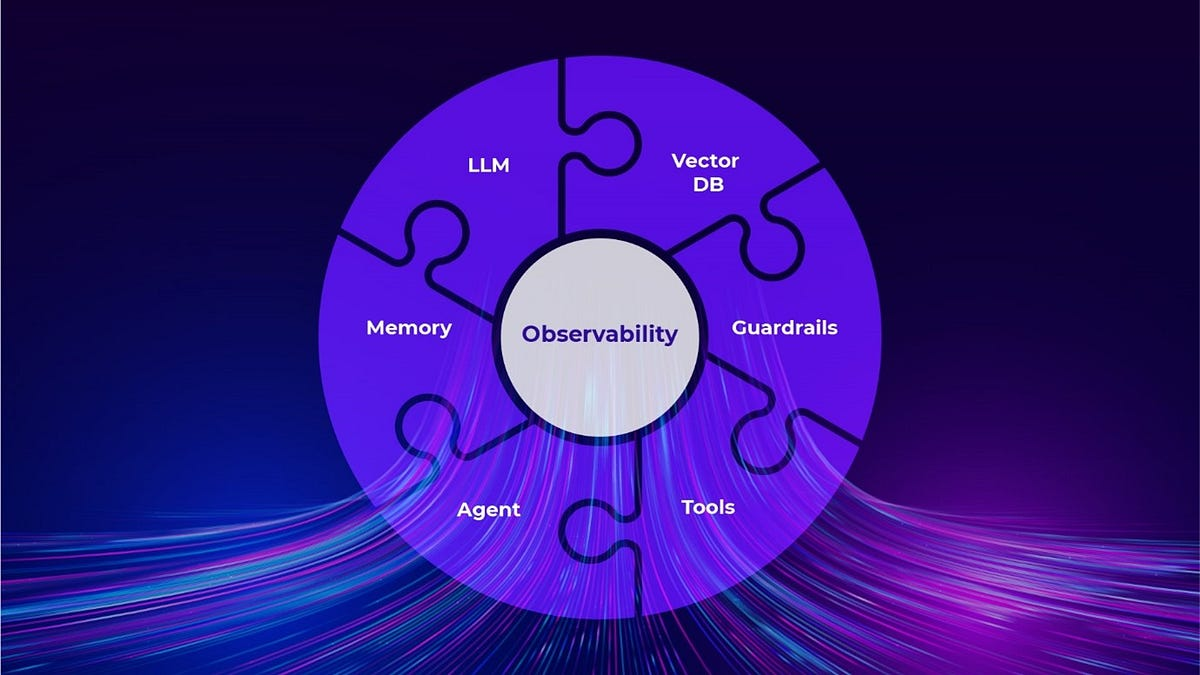
This is where AI observability begins to take shape. Rather than acting as a passive layer of monitoring, it becomes an active layer of interpretation.
The goal is not automation for its own sake. It is clarity.
Why Context Is More Valuable Than Raw Metrics
A single metric rarely tells the full story.
Take a spike in latency. On its own, it might look serious. But without context, it is hard to know whether it is caused by infrastructure, application logic, or external dependencies.
Now add context.
If that latency spike coincides with a deployment, affects a high value customer segment, and correlates with a drop in transaction success rates, the priority becomes clear.
This is where observability becomes useful.
By linking technical data with business outcomes, teams can move faster and make better decisions. They are no longer reacting to isolated signals. They are responding to meaningful events.
A study from McKinsey & Company found that organisations using advanced analytics to connect operational data with business impact significantly improve their response times and reduce incident severity.
It is not about having more data. It is about having the right context.
Reducing the Cost of Investigation
One of the hidden costs in modern systems is investigation time.
When an issue occurs, teams often spend more time diagnosing the problem than fixing it.
They check logs, compare dashboards, consult different teams, and piece together a timeline of events. This process is necessary, but it is also inefficient.
The future of observability focuses on reducing this cost.
Instead of requiring manual investigation across multiple tools, systems can identify patterns, correlate signals, and suggest likely causes.
This does not eliminate the need for human judgement. It reduces the amount of work required to reach a conclusion.
Over time, this shift can have a significant impact on productivity.
Breaking the Dependency on Specialist Knowledge
Another challenge with traditional observability is that it often depends on a small group of experts.
These individuals understand how to interpret complex dashboards, trace dependencies, and identify root causes. When they are available, issues are resolved quickly. When they are not, progress slows down.
A decision focused approach to observability aims to reduce this dependency.
By simplifying how information is presented and providing clearer guidance, more team members can participate in diagnosing and resolving issues.
This creates a more resilient organisation where knowledge is shared rather than concentrated.
Real World Applications Across Industries
This shift is already visible in different sectors.
In financial services, observability platforms are being used to link system performance directly to transaction outcomes. A technical issue is prioritised based on its impact on revenue rather than its position in a dashboard.
In retail, performance metrics are tied to customer experience. Slow page loads or failed checkouts are immediately connected to conversion rates.
In communication platforms, voice quality metrics are linked to user satisfaction and productivity. This allows teams to prioritise improvements based on real user impact rather than technical thresholds.
In each case, the focus is the same. Move from monitoring systems to improving outcomes.
What Needs to Change Internally
Adopting this approach requires more than new technology. It requires a shift in how teams think about observability.
Some practical changes include:
Defining clear business outcomes that matter
Mapping technical metrics to those outcomes
Reducing unnecessary metrics that do not drive decisions
Encouraging collaboration between technical and business teams
It also means being comfortable with less data in some areas. Not every metric needs to be tracked or displayed.
The goal is not completeness. It is usefulness.
The Risk of Staying Dashboard Focused
Organisations that continue to rely heavily on dashboards without evolving their approach may find themselves overwhelmed.
As systems grow more complex, the number of metrics will continue to increase. Without better ways to interpret and act on that data, teams will spend more time analysing and less time improving.
This creates a bottleneck.
Issues take longer to resolve. Opportunities are missed. Teams become reactive rather than proactive.
The gap between visibility and action becomes a real limitation.
Conclusion
Observability is entering a new phase. The focus is shifting from seeing everything to understanding what matters.
Dashboards are not going away, but they are no longer the end goal. They are just one part of a larger system designed to support better decisions.
Approaches like AI observability are helping bridge the gap between data and action, but the real change comes from how organisations use that capability.
Because in the end, the value of observability is not in the data it provides. It is in the decisions it enables and the outcomes it improves.