Deep work is becoming harder to protect. Professionals are surrounded by messages, browser tabs, shared files, calendar reminders, and meetings that break attention into small pieces. Even when people have enough time to think, the tools around them often make focused work more difficult.
This is one reason E Ink productivity devices are gaining attention. Tools such as iflytek ainote offer a quieter way to read, write, review documents, and organize ideas without the constant pull of a laptop or phone. For people who need long periods of concentration, a paper-like device can feel less like another screen and more like a dedicated workspace for thinking.
Deep Work Needs Fewer Distractions
Most digital tools are built to do many things at once. A laptop can handle writing, research, email, messaging, video calls, and entertainment. That flexibility is useful, but it also creates friction for deep work. A person may open a document to review a report, then get pulled into a notification or unrelated task within minutes.
E Ink productivity devices take a different approach. Productivity-focused brands like iFLYTEK are connecting focused tasks such as reading, handwriting, note-taking, and document annotation with smarter AI workflows. This narrower purpose can help users stay with one type of work for longer instead of switching between apps.
Reading Feels More Comfortable for Longer Sessions
Deep work often starts with deep reading. Professionals may need to review research papers, contracts, strategy documents, technical manuals, meeting notes, or long reports. Reading these materials on a bright laptop screen can be tiring, especially when the work requires careful attention over an extended period.
A paper-like display can make long reading sessions feel calmer. It reduces the sense of staring into a standard backlit screen and gives users a format that feels closer to reading printed pages. This matters for people who need to absorb details, compare ideas, and think through complex information.
Comfort does not automatically create focus, but it removes one barrier. When reading feels easier, professionals are more likely to spend enough time with the material to understand it fully.
Handwriting Supports Better Thinking
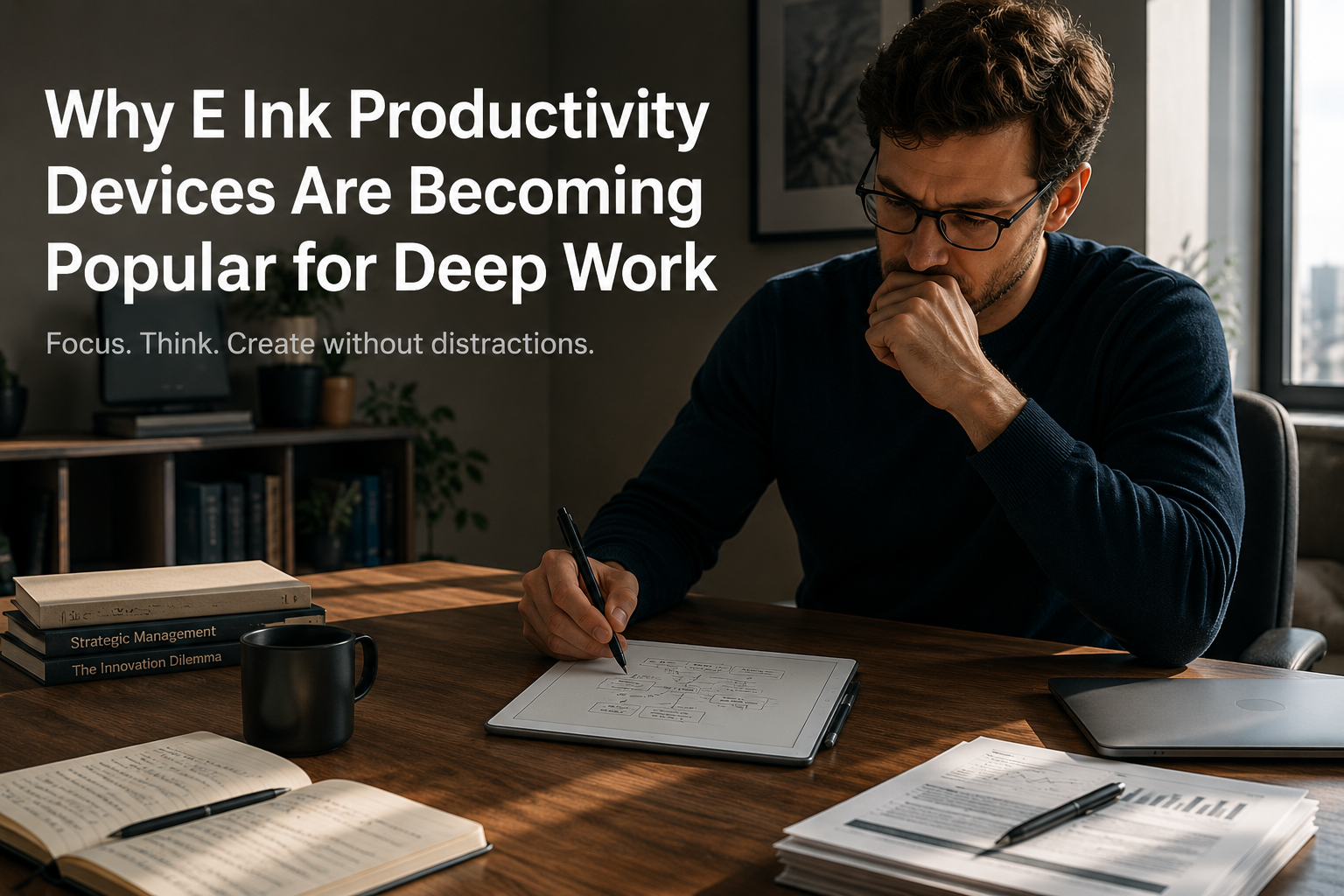
Typing is fast, but handwriting still plays an important role in serious thinking. Many people use handwritten notes to connect ideas, sketch rough diagrams, circle important points, and capture thoughts before they are fully formed. This is useful during planning, brainstorming, research, and meeting review.
E Ink productivity devices preserve the benefits of handwriting while improving what happens afterward. Notes can be stored digitally, grouped by project, revisited later, and paired with other work materials. This helps users keep the natural flow of pen-based thinking without losing the advantages of digital organization.
A Better Space for Document Review
Modern work involves a large amount of document review. A manager may need to mark up a proposal, a lawyer may review a contract, a researcher may annotate a paper, and a consultant may compare client materials. These tasks require attention to detail, not constant multitasking.
An E Ink productivity device can act as a focused review space. Users can read, mark sections, write comments, and return to important points without surrounding the document with unrelated apps. This makes the device useful not only for note-taking but also for knowledge work that depends on careful reading and clear judgment.
AI Makes Paper-Like Devices More Useful
The newest productivity devices are not only about screen comfort. AI features are changing what these tools can do after notes are written or meetings are finished. Instead of leaving information as isolated handwriting, AI can help with summaries, search, transcription, and organization.
Modern AI-supported productivity devices show how this category is moving beyond simple digital paper. When handwriting, meeting notes, and AI-supported organization work together, professionals can capture ideas more naturally and return to them more efficiently later.
This is important because deep work does not end when someone writes a note. The value comes from being able to revisit the idea, connect it to other information, and turn it into a decision, task, or next step.
Why Professionals Are Making the Shift
The growing interest in E Ink productivity devices reflects a larger change in work habits. Many professionals do not want more noise in their workflow. They want tools that help them slow down, think clearly, and stay organized.
These devices are useful for managers, consultants, researchers, students, writers, executives, and business travelers. They can support meeting preparation, long-form reading, personal planning, project notes, and document review. For people who move between offices, client sites, and home workspaces, a lightweight paper-like device can also be easier to carry than a stack of notebooks or printed files.
Choosing the Right Productivity Device
The best device depends on how someone works. A person who reads long documents may care most about screen comfort and annotation. A manager may need meeting notes and task organization. A researcher may want handwriting, search, and document storage. A business traveler may care about portability and battery life.
The strongest productivity devices are the ones that connect paper-like writing with practical AI workflows. For users who want a focused device for reading, writing, and organizing business information, this kind of tool shows how the category is evolving.
Final Thoughts
E Ink productivity devices are becoming popular because they answer a real workplace problem. Professionals need technology, but they also need space to think. Laptops and phones are powerful, yet they often bring too many distractions into tasks that require focus.
A paper-like productivity device offers a calmer alternative. It supports reading, handwriting, document review, and organized thinking in a more focused environment. As AI continues to improve how notes and documents are managed, these devices will become more useful for professionals who want to protect deep work and turn focused thinking into better results. This reflects a wider shift toward tools that are not only smarter, but also more supportive of the way people actually think and work.