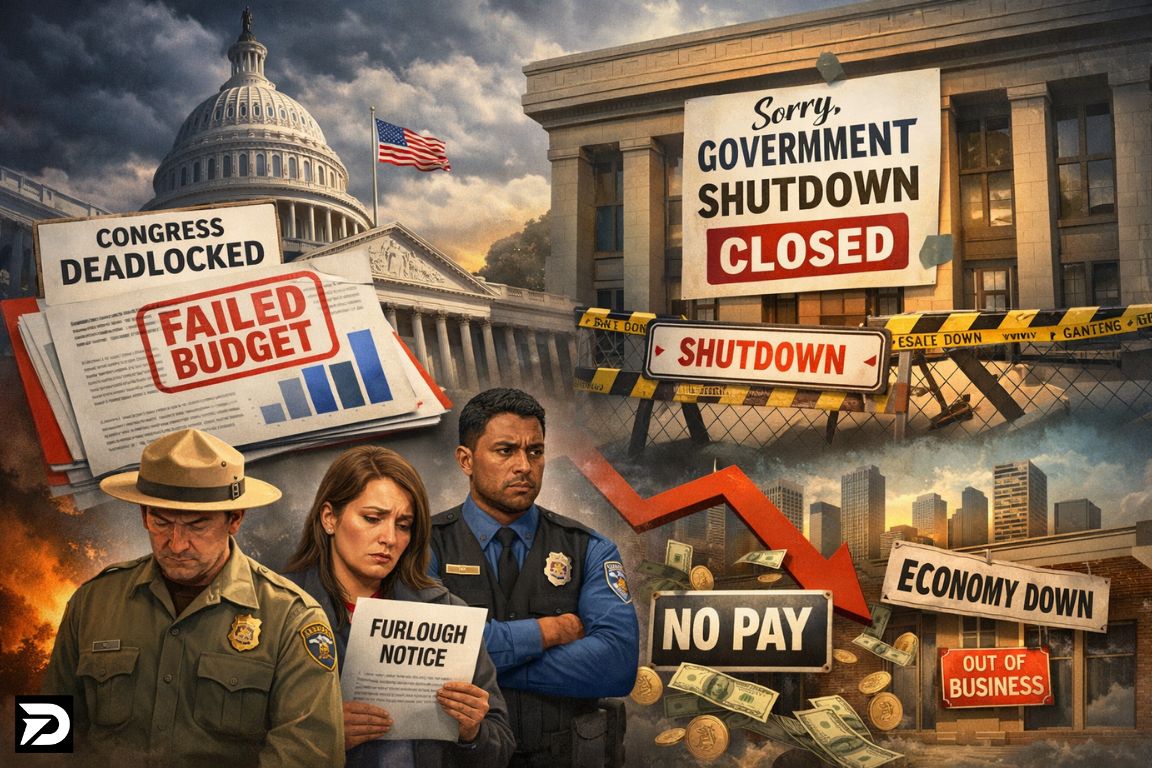
A government shutdown is an event that affects millions of people, from federal employees to everyday citizens who rely on government services. The United States government has experienced several shutdowns throughout its history, but with each new one, the impacts seem to grow larger. This blog post will break down everything you need to know about a government shutdown — from its causes to its far-reaching consequences in 2025 and beyond. We will also address key related terms like “is the government shutdown over” and explore the ongoing uncertainty of the federal government shutdowns.
What is a Government Shutdown?
A government shutdown occurs when Congress and the President cannot agree on funding for federal government operations. This stalemate halts non-essential government services, causing disruptions to federal programs, agencies, and services. The core issue behind a shutdown is often a disagreement over the federal budget, where lawmakers fail to pass the necessary appropriations bills or resolutions needed to fund government operations.
For a government shutdown to happen, Congress must pass funding bills, which are then signed into law by the President. If this process is delayed or deadlocked, the government’s funding runs out, and many agencies shut down or operate at reduced capacity. Typically, essential services like national security, healthcare, and law enforcement remain operational, but many others are affected.
A government shutdown may last anywhere from a few hours to several weeks, depending on the resolution between political leaders. The most notable and recent shutdowns have drawn attention for their economic consequences, political debates, and social impact, especially when questions like “is the government shutdown over” pop up amid ongoing discussions.
Causes of a Government Shutdown
The causes behind a government shutdown are often complex and deeply rooted in political disagreements. Understanding these causes requires exploring the mechanics of the U.S. government’s budgeting process. Here are the most common factors that contribute to a government shutdown:
1. Budget Disagreements
A shutdown occurs primarily when Congress and the President cannot agree on the federal budget. This could involve disagreements over spending allocations, taxes, or specific policy priorities, such as defense or healthcare.
2. Failure to Pass Funding Bills
If Congress does not pass the required funding bills before the start of the new fiscal year, which begins on October 1st, a shutdown is inevitable. Without the funding, the federal government cannot legally operate.
3. Political Deadlock
Sometimes, a shutdown arises due to political strategies used by lawmakers. This could include using a shutdown to push for specific policies or leverage other negotiations. This is especially common in divided government scenarios where different political parties control different branches of the government.
4. Proposed Policy Changes
A shutdown may also be driven by contentious policy proposals attached to budget bills. These could include measures like cuts to social programs or changes in immigration laws, leading to clashes between political factions.
The Impacts of a Government Shutdown
The impact of a government shutdown reaches far beyond just federal employees. It affects the economy, essential services, and the daily lives of Americans. Here’s a closer look at the consequences:
Economic Effects
The economic consequences of a government shutdown can be significant. When the government halts non-essential services, there are disruptions to everything from government contracts to the functioning of federal agencies. In 2018–2019, the U.S. experienced a 35-day shutdown, costing the economy an estimated $11 billion.
Several key areas are affected by the economic shutdown:
- Federal Services: A shutdown puts programs like the Small Business Administration’s loan programs or the U.S. Department of Agriculture’s food assistance programs on hold.
- Public Confidence: Ongoing shutdowns can erode public trust in government, leading to uncertainty about future investments, programs, and government initiatives.
- Tourism: National parks, museums, and other federally managed tourist sites often close, affecting the local economies dependent on tourism dollars.
Impact on Federal Employees
The most direct victims of a government shutdown are federal employees. When non-essential government operations cease, federal workers may be furloughed (temporarily laid off without pay) or required to work without pay. Essential employees are typically required to continue working, but their pay may be delayed until after the shutdown ends.
Federal workers often face significant financial hardships, especially if the shutdown lasts for an extended period. Many government agencies, such as the FBI and NASA, face staff shortages or reduced operational capacity. The impact on workers can extend beyond financial strain, affecting morale and productivity.
Effects on Essential Services
Although essential services are generally maintained during a shutdown, many functions still face delays or inefficiencies. For example:
- Social Security and Medicare: Payments and services related to Social Security, Medicare, and Medicaid may continue, but there could be delays in processing claims or new applications.
- National Security and Law Enforcement: Agencies like the FBI, CIA, and military remain operational, but budget restrictions may hinder certain activities, such as training or intelligence gathering.
- Health and Safety: Critical public health functions such as the CDC’s disease prevention efforts and FDA’s monitoring of food and drugs may be impacted, though emergency services are generally maintained.
The Government Shutdown in 2025: What to Expect
As we look ahead to potential government shutdowns in 2025, the political landscape remains unpredictable. Although some issues like federal debt ceiling negotiations and budget cuts have been resolved, there is still a high likelihood of shutdowns due to ongoing policy debates. The rise of more polarized politics in Congress means that these types of standoffs may become more frequent.
If the government shuts down in 2025, it could lead to similar impacts as in previous shutdowns. The economy will likely feel the strain, with federal workers and services again caught in the crossfire. Public confidence in government could continue to wane, and businesses that rely on federal contracts might experience delays or disruptions.
However, 2025 may also see new strategies to mitigate shutdowns. Some experts predict more frequent short-term funding measures or automatic funding extensions to avoid these catastrophic budget battles.
What Happens When the Government Shutdown Ends?
When a government shutdown concludes, a flurry of activity takes place to restore normal operations. Here’s what typically happens:
- Reopened Services: Many services that were closed or delayed during the shutdown will resume operations. Federal workers will return to work, and programs like national parks and museums will open to the public again.
- Backlog of Work: Agencies that were closed or working with limited staff will often face a backlog of tasks. This means there may be delays in services, payments, and paperwork processing as they catch up on their workload.
- Recovery of Lost Wages: Federal workers who were furloughed or worked without pay during the shutdown will often receive their back pay, though this is not always guaranteed.
- Rebuilding Trust: Restoring public confidence can take time. The political fallout from a shutdown often includes increased scrutiny of lawmakers and their ability to govern effectively.
Is the Government Shutdown Over?
With each new shutdown, the question “is the government shutdown over?” tends to dominate the headlines. During a shutdown, it’s often unclear when it will end. Lawmakers typically negotiate for weeks, leading to public frustration.
Once a shutdown ends, Congress passes a funding bill or a continuing resolution that restores government funding. It may take days, weeks, or even months for these negotiations to conclude.
Conclusion
Understanding the government shutdown — its causes, impacts, and what’s at stake — is essential for grasping how it affects both government operations and daily life in the U.S. While these shutdowns are a normal part of U.S. governance, they have far-reaching consequences, from financial hardships for workers to economic instability and disrupted services. As we look to 2025 and beyond, it’s clear that government shutdowns remain a central issue in U.S. politics. The challenge moving forward will be finding ways to prevent these standoffs from wreaking havoc on the economy, citizens, and federal employees.
FAQs
- What causes a government shutdown?
A government shutdown occurs when Congress fails to pass a budget or funding resolution, halting non-essential federal services. - How long can a government shutdown last?
A shutdown can last anywhere from a few hours to several weeks, depending on how quickly lawmakers reach an agreement. - What happens to federal workers during a shutdown?
Federal workers may be furloughed, or in some cases, they may be required to work without pay until the shutdown ends. - Is the government shutdown over right now?
The answer depends on the current status of negotiations. You can check the latest news for updates on any ongoing shutdowns. - What happens when a government shutdown ends?
When a shutdown ends, federal services reopen, workers return to their jobs, and agencies begin clearing any backlog of work caused by the shutdown.