The automotive world is changing fast. New vehicles are smarter, lighter, and more advanced than ever before. From electric cars to modern safety systems, today’s vehicles need parts that are strong, precise, and designed for new technology.
This is where custom component manufacturing becomes very important. Instead of using standard parts, manufacturers create components that match the exact needs of next-generation vehicles. These custom parts help improve performance, safety, and efficiency.
In this blog, we will explore how manufacturing custom components supports the future of vehicles and why it plays a key role in building the next generation of transportation.
The Evolution of Custom Automotive Components in Modern Vehicle Production
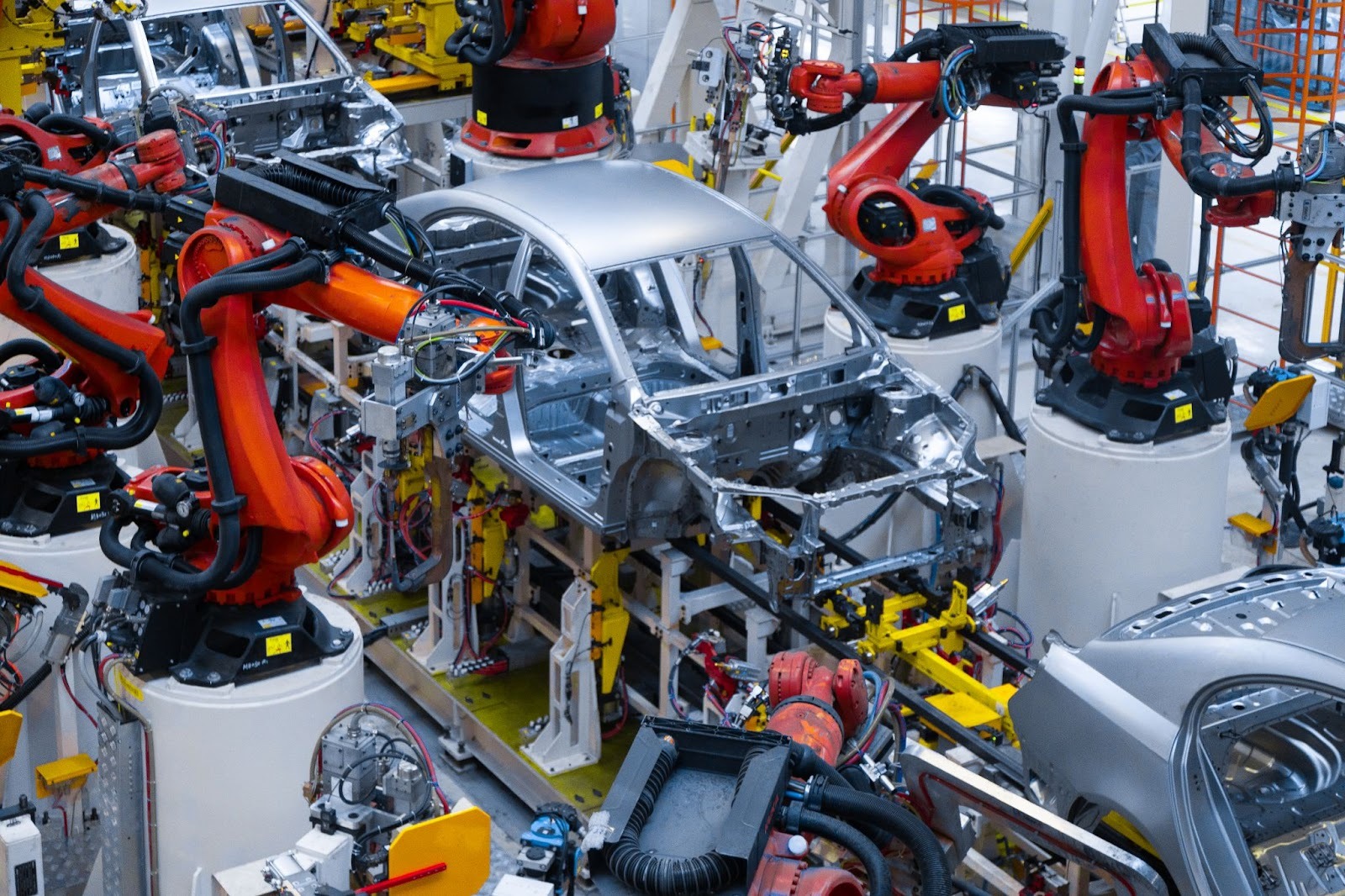
What’s happening in automotive isn’t just about installing batteries where engines used to go. We’re talking about a fundamental reimagining of vehicle design, power delivery, and production methodologies.
Understanding Next-Generation Vehicle Manufacturing Requirements
Next-generation vehicle manufacturing covers EVs, self-driving platforms, and hybrid architectures operating under completely different mechanical principles than internal combustion.
Electric drive systems require thermal regulation that conventional vehicles never needed. Battery arrays produce extraordinary heat; we’re looking at 2-3 kilowatts during rapid charging cycles, which means you need cooling technologies that literally didn’t exist half a decade ago.
Material innovation is exploding, too. Carbon fiber matrices, cutting-edge polymers, and specialty alloys are pushing aside conventional steel and aluminum.
When you’re developing components that must perform flawlessly for autonomous sensor arrays or mesh perfectly with intelligent vehicle systems, partnering with a specialized thermoforming company on next-generation vehicle manufacturing projects becomes critical.
These collaborators deliver deep knowledge in creating intricate geometries that traditional methods simply can’t achieve.
Why Custom Car Parts Manufacturing Is Essential for Innovation
Mass-market components can’t solve the specialized demands of modern vehicles. Take battery housings, they must be featherweight yet fire-proof, thermally efficient yet electrically isolated. You won’t discover that combination sitting on any supplier’s shelf.
Custom car parts manufacturing gives your engineering team control over every variable. Need sensor protection with an IP69K environmental rating plus optical transparency for LiDAR systems? Custom design is your only option. Looking to embed cooling pathways directly inside motor housings? You’ll require automotive component fabrication built precisely to your specifications.
Critical Manufacturing Processes for Advanced Vehicle Parts
Different production techniques serve different needs. Choosing the right process for your application determines whether you succeed or struggle.
Precision Thermoforming for Complex Vehicle Geometries
Thermoforming is experiencing a renaissance in automotive production. Heavy-gauge variants create structural elements like battery enclosures and underbody protection. Thin-gauge applications handle interior trim and aesthetic panels.
Multi-layer thermoforming is especially fascinating for thermal management. By layering materials with contrasting characteristics, perhaps a heat-resistant exterior with an insulating middle, you develop components that regulate temperature without extra weight. For parts stretching up to 10 feet in dimension, thermoforming provides unbeatable cost benefits over competing methods.
Advanced Composite Layup and Molding Techniques
Carbon fiber reinforced panels slash weight by 30-50% compared to traditional materials (manufacturing industry data). That’s transformative for EVs where every kilogram directly affects driving range.
Sheet molding compound (SMC) delivers Class-A surface quality for exterior body panels, while resin transfer molding (RTM) generates high-strength structural elements.
Precision CNC Machining for High-Performance Components
When you need tolerances at ±0.001mm, essential for ADAS sensor housings, CNC machining becomes mandatory. Five-axis equipment creates elaborate battery housing parts in single operations, removing alignment problems from multi-step processes.
Swiss-type turning manufactures precision fasteners and electrical connectors at scale. Cryogenic machining addresses heat-sensitive materials that would deform under standard cutting conditions.
Essential Custom Automotive Components for Next-Generation Vehicles
Let’s get specific about what’s actually being produced. These components represent a complete departure from traditional auto parts.
Electric Powertrain Components
Battery enclosures must endure mechanical forces, manage thermal challenges, and deliver electrical isolation. Busbar networks carry high-voltage electricity,800V and beyond,demanding precision production to avoid hot spots or electrical arcing.
Motor housings increasingly incorporate cooling passages directly within their structure. Instead of attaching separate heat management systems to motors, forward-thinking manufacturers are engineering housings with integrated fluid channels. This consolidation cuts weight while boosting thermal performance.
Autonomous Vehicle Sensor Systems and Housings
LiDAR devices operate exposed on vehicle exteriors, mapping environments millions of times each second. Their protective shells need optical purity while resisting stone damage, temperature fluctuations from -40°C to 85°C, and prolonged UV bombardment.
Radar sensors demand mounting hardware with vibration isolation; any motion compromises detection precision. Camera assemblies require IP69K protection against high-pressure washing while keeping precise lens positioning. These are sophisticated engineering challenges.
Advanced Materials Revolutionizing Custom Car Parts Manufacturing
Materials engineering is where innovation truly accelerates. Novel polymers and composites enable functionality that was pure science fiction five years back.
High-Performance Polymers and Engineering Plastics
PEEK handles continuous temperatures up to 250°C, making it perfect for under-hood placement near electric motors. PPS provides chemical resistance for battery components facing electrolyte exposure. LCP’s dimensional consistency suits precision electrical connections where thermal expansion means failure.
Bio-sourced polyamides are gaining serious momentum. They’re not marketing spin; contemporary bio-polymers equal or surpass petroleum-based alternatives in mechanical characteristics while cutting carbon footprints by 30-40%.
Next-Generation Composite Materials
Graphene-enhanced polymers deliver strength improvements 200 times greater than traditional reinforcements. Carbon nanotube composites are transitioning from research labs into actual production. Natural fiber composites utilizing flax or hemp offer sustainable options with solid mechanical properties.
Industry 4.0 Integration in Automotive Component Fabrication
Digital transformation isn’t empty marketing speak; it’s genuinely reshaping how components get manufactured.
Digital Twin Technology for Component Optimization
Virtual prototyping reduces development cycles by 40-60%. Your engineers can simulate production processes, forecast performance across diverse scenarios, and refine designs before working with actual materials. Real-time digital twins monitor components throughout their operational lifespan.
AI-Powered Quality Control Systems
Machine vision platforms inspect every single part at full production velocity with 99.9%+ detection accuracy. They’re identifying defects that human eyes would never catch while eliminating production delays. Predictive maintenance algorithms use AI to anticipate equipment problems, cutting downtime by 30-50%. That’s massive for manufacturers operating on demanding schedules.
Questions About Manufacturing Custom Automotive Components
What’s the typical lead time for custom automotive components?
Prototype pieces require 2-4 weeks for thermoformed or machined elements, while sophisticated composites need 6-8 weeks. Production tooling and initial articles demand 12-16 weeks for injection molding, 8-12 weeks for thermoforming. Early supplier collaboration significantly reduces these timelines.
How do material choices impact total ownership costs?
Material selection influences upfront expenses, lifecycle durability, warranty incidents, and end-of-life recycling. Long-fiber thermoplastics cost 25-30% more than conventional plastics but slash warranty claims by 40-60%. Carbon fiber demands 3-5x higher initial investment but returns $500-1,200 in fuel economy over vehicle lifespans.
What certifications should automotive component manufacturers have?
Critical certifications include IATF 16949:2016 for quality systems, ISO 14001 for environmental management, and ISO 26262 for electronic component functional safety. OEM-specific credentials like Ford Q1 or GM Supplier Quality confirm proven track records.
Wrapping Up: The Future of Automotive Manufacturing
Manufacturing custom components for next-generation vehicles requires expertise across materials science, precision production, and emerging digital technologies. That $850 billion market opportunity isn’t inflated optimism; it’s reality, powered by electric vehicles, autonomous platforms, and connected cars demanding parts that didn’t exist ten years ago.