In a world where we carefully curate our social media profiles, rehearse our elevator pitches, and strategically choose our professional wardrobes, there’s one element of our appearance that often tells the truth whether we intend it to or not: our smile. Unlike the words we choose or the confidence we project through body language, a genuine smile operates on a level that bypasses our conscious control, making it one of the most revealing aspects of who we are.
The Science of Smiling and Authenticity
Research in behavioral psychology has consistently shown that authentic smiles, known scientifically as Duchenne smiles, engage muscles around both the mouth and eyes. These smiles are notoriously difficult to fake because they involve involuntary muscle movements. When someone feels genuinely happy or confident, their entire face participates in the expression. However, when people feel self-conscious about their teeth or the appearance of their smile, something fascinating happens: they often suppress this natural response entirely or produce a tight-lipped version that others instinctively recognize as inauthentic.
This creates a peculiar paradox in professional settings. You might be the most qualified candidate in the room, the most knowledgeable expert on your team, or the most deserving of that promotion, but if your smile betrays discomfort or insecurity, it sends a competing message that can undermine your other strengths. The issue isn’t about vanity or superficiality. It’s about the fundamental human need to communicate confidence and openness through facial expressions.
How Dental Confidence Shapes Professional Perception
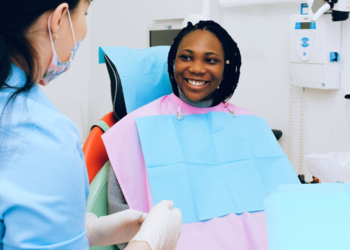
Consider the typical professional interaction: a job interview, a client presentation, or a networking event. In these moments, your smile serves as a social signal that communicates approachability, trustworthiness, and self-assurance. When people feel confident about their dental appearance, they smile more frequently and more broadly. This increased smiling behavior triggers a cascade of positive social responses.
Studies in organizational psychology reveal that professionals who smile authentically are perceived as more competent, more likeable, and more trustworthy than their counterparts who smile less or whose smiles appear forced. This perception gap can translate into tangible career outcomes, from hiring decisions to leadership opportunities. The reality is that our brains are wired to make rapid assessments about others based on facial expressions, and a confident smile registers as a marker of overall confidence and capability.
When professionals consult with a cosmetic dentist Preston or elsewhere, they often report that the decision stems from years of covering their mouths when laughing, avoiding cameras, or consciously limiting their smile during important interactions. These behavioral patterns become so ingrained that they persist even in situations where a genuine smile would serve their interests. The professional cost of this restraint accumulates over time, potentially affecting everything from salary negotiations to advancement opportunities.
Beyond First Impressions
The impact of smile confidence extends far beyond initial encounters. In ongoing professional relationships, your willingness to smile openly affects how colleagues perceive your mood, your receptiveness to ideas, and your overall engagement. Teams led by people who smile authentically report higher levels of job satisfaction and collaboration. The smile becomes a tool for building rapport and maintaining positive working relationships over time.
Moreover, there’s a feedback loop at play. When you smile more, people respond more positively to you. These positive responses reinforce your confidence, which makes you more likely to smile in future interactions. For people who have spent years minimizing their smiles due to dental insecurities, breaking into this positive cycle requires addressing the underlying concern.
Rethinking Professional Development
Traditional professional development focuses on skills, knowledge, and experience. However, the emerging understanding of how confidence and nonverbal communication affect career trajectories suggests we need a more holistic approach. Your smile, and your comfort with it, represents a legitimate area for professional investment.
The honesty of your smile tells a story about your self-perception and confidence. When that story aligns with your professional ambitions and capabilities, it creates coherence that others recognize and respond to positively. When there’s a disconnect, when you’re holding back your natural expressiveness due to insecurity, that hesitation communicates something unintended.
Your career deserves the full power of your authentic presence, including an unrestrained smile. Recognizing that your smile might be revealing more about your confidence than you realize isn’t about conforming to superficial standards. It’s about ensuring that nothing prevents you from showing up as your most authentic, confident self in every professional opportunity that comes your way.