The human body is generally uncooperative about foreign objects. Splinters are pushed out, piercings can be rejected, and most implanted materials provoke some defensive response. Titanium is one of the rare exceptions, and the reason has less to do with the metal itself than with the invisible layer that forms on its surface.
An Oxide Layer Does the Work
Expose titanium to air, and it develops an extremely thin film of titanium dioxide. This happens within moments and reforms almost instantly if the surface is scratched. That film is chemically stable, resistant to corrosion, and largely inert in the environment inside the body.
What tissue actually meets, then, is not raw metal but this stable oxide surface. Because it releases very little into surrounding tissue, the immune system has less to react against, and healing proceeds without the persistent inflammation that other materials can trigger.
The self-repairing quality matters more than it first appears. During placement, an implant surface is handled, driven through bone, and subjected to considerable force. Any scratching is sealed again within moments by the same reaction that formed the layer originally, so the surface presented to healing tissue stays consistent regardless of what happened during the procedure.
Why Alternatives Exist and Still Compete
Titanium is not the only option. Ceramic alternatives based on zirconia are used where patients prefer a metal-free solution or where the natural whiteness offers an advantage in visible areas. Each material has trade-offs in strength, flexibility, and long-term performance.
Zirconia is harder and more brittle, which means it resists wear well but has less tolerance for flexing under load. Titanium is slightly more forgiving in that respect. In visible front positions, ceramic can avoid the faint grey shadow that occasionally shows through very thin gum tissue, which is a real consideration for some people and irrelevant for others.
Anyone researching dental implants Melbourne practices provide will encounter both, and a reasonable practitioner will explain why one suits a particular case better than the other. Bone quality, bite forces, aesthetics, and personal preference all feed into that decision, and no single answer fits everyone.
A Small Piece of Materials Science
There is something quietly satisfying about the underlying idea. A metal that is unremarkable in isolation becomes exceptional because of an oxide layer thinner than anything the eye could resolve, and because bone happens to treat that surface as something it can build against.
That combination of chemistry and biology is why the same material appears in hip replacements, surgical plates, spinal hardware, and pacemaker casings. The requirements differ across those applications, but the underlying advantage is identical in each.
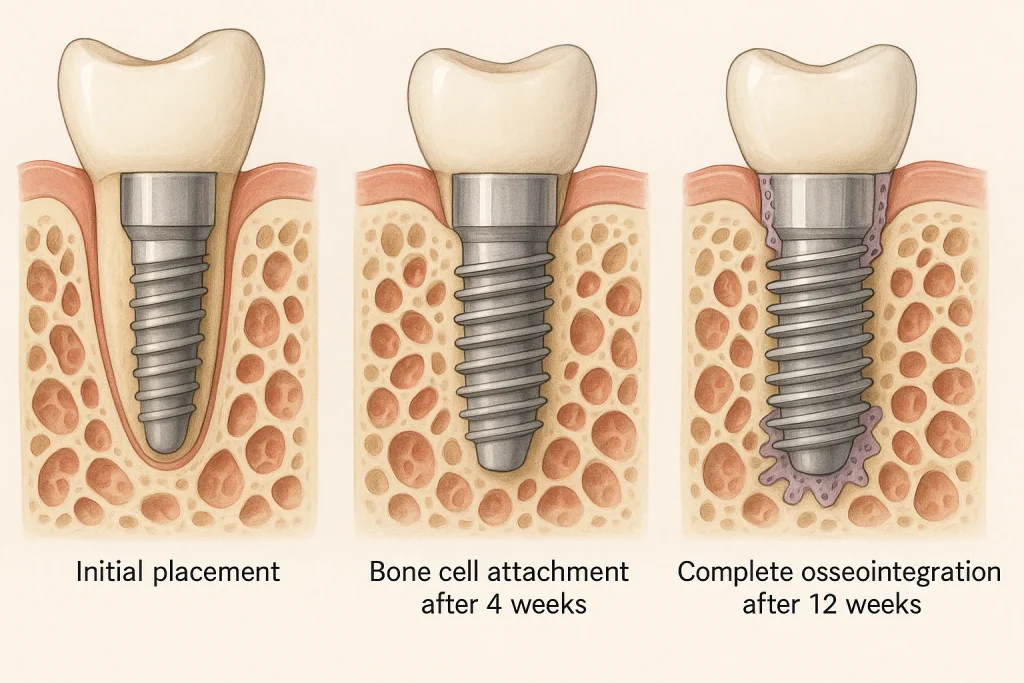
It works not by overpowering the body’s defences but by giving them nothing to object to. For anyone weighing up a decision, that is a genuinely reassuring principle. The success of the approach does not depend on suppressing a natural response or on the body tolerating something it dislikes. It depends on a material the body has no reason to fight, placed carefully, and given time to become part of the structure around it.