Ask any photographer who has worked at a Santorini wedding what they remember, and few will talk about the dress. They talk about the light. On an early summer evening, the whitewashed walls turn apricot, the caldera goes silver, and every guest suddenly forgets they ever complained about the stairs. Choosing between wedding venues in Santorini is mostly a question of where you want to be standing when that happens.
Wedding venues in Santorini
The island is small, yet the wedding venue in Santorini option feels endless. There are hotels on the cliff edge, vineyards in the south, black sand beaches on the east coast and chapels with blue domes that seem to exist only for postcards. The trick is to know what each part of the island does well before you fall for the first sunset photo you see.
The caldera, where most couples start
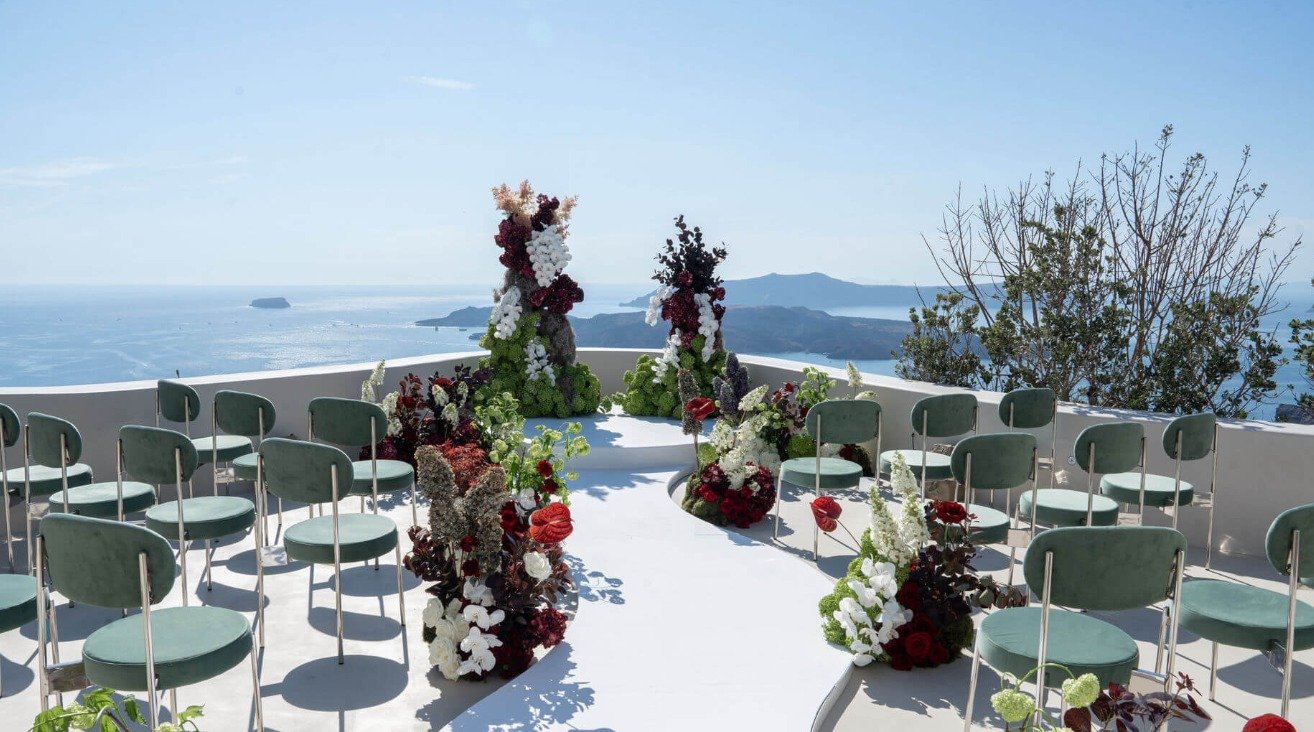
The western cliffs are the reason most people come. Oia, Imerovigli and Fira sit along the rim, looking straight down into the flooded volcanic crater, with the volcano islets floating in the middle. Many small hotels here hold ceremonies on terraces that hang over the drop, often for a few dozen guests at most.
Oia is the famous one, and it knows it. Its sunsets draw crowds every evening in high season, so a ceremony timed for golden hour can end up with an audience of strangers holding phones. Imerovigli sits higher and is quieter, with much the same view and far fewer people. Fira is the practical choice. It has the most restaurants and the main bus station, and older relatives who would rather not climb can reach it easily.
Caves and terraces
Traditional cave houses, carved into the soft volcanic rock, often double as reception spaces. They stay cool in July and work beautifully for an intimate dinner after the ceremony. The catch is size. A terrace that fits forty people for vows rarely fits forty people seated for a meal, so ask about both before you sign.
Beyond the cliffs
Not every couple needs the caldera. The southern half of the island is quieter and greener, with wineries where long tables sit between low vines twisted into basket shapes against the wind. A vineyard reception feels closer to a family lunch in the countryside than a hotel event, and it usually gives you more room.
On the east coast, the black and red sand beaches near Kamari, Perissa and Perivolos suit barefoot ceremonies and long nights. Akrotiri, at the southwestern tip, adds its lighthouse and some of the most open sunset views on the island. Some couples even marry at sea, on a boat that circles the caldera and drops anchor near the hot springs.
Church, town hall or symbolic
The venue decides the photos. The paperwork decides whether you are legally married.
A civil wedding takes place at the town hall in Fira or at an approved location. An official leads it rather than a priest, in Greek or English. Since February 2024, same sex couples can also have a civil wedding in Greece. Orthodox ceremonies happen in the island’s many chapels, and Fira also has a Catholic cathedral.
Every legal option needs documents prepared well ahead. Birth certificates and a certificate of no impediment usually need an apostille and an official Greek translation. Local planners suggest sending scans at least a month in advance, ideally two or three. You also need two witnesses. Many couples skip all of this, sign the legal papers at home, and hold a symbolic ceremony on the island instead, which frees them to marry wherever they like.
When to book, and when to marry
Peak months bring heat and crowds. July and August also bring the meltemi, the strong northern wind that can whip veils sideways and send napkins over the edge of a terrace. May, June and late September tend to offer softer light, calmer evenings and water warm enough for a swim the morning after. October is cheaper and often lovely, though the days get shorter.
Popular hotels and wineries fill up early. Some planners suggest booking the most popular places more than a year ahead, and guest rooms nine to eleven months out.
The part nobody plans
You can spend months comparing terraces and menus, and still the moment people talk about later is something small. A grandmother made it up the steps and refused all help. The wind dropped just as the sun touched the sea.
Santorini gives you the stage. The rest happens on its own, somewhere between the first glass of local white and the last ferry horn of the night.