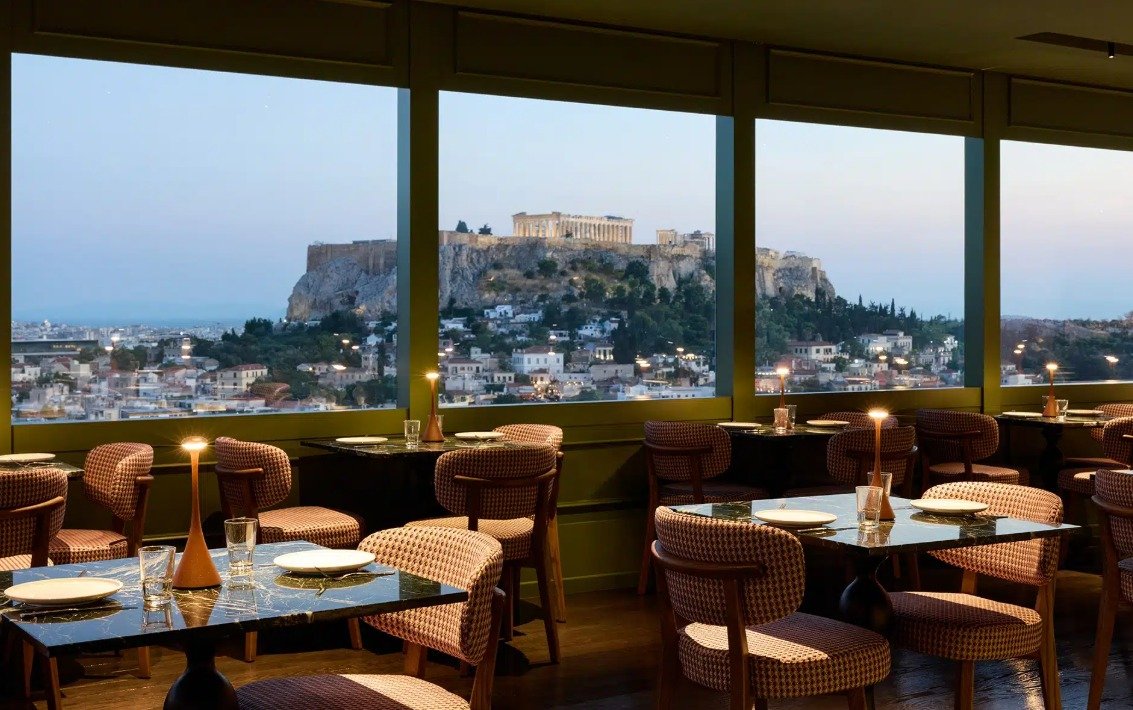
There is a particular kind of silence that falls over a hotel balcony in Athens when the floodlights come on and the Parthenon starts to glow above the rooftops. Conversations stop, phones come out, and somebody inevitably says they could stay here forever. It is no surprise that a hotel in Athens with Acropolis view sits at the top of so many wish lists. The tricky part is that “Acropolis view” can mean quite different things depending on who wrote the room description, so it pays to know what you are booking.
Three kinds of “view”
In practice, the phrase covers at least three situations. The first is the one everybody imagines, a room or balcony facing the hill directly, where you can lie in bed with your morning coffee and watch the light move across the marble. The second is a partial view, where the Acropolis appears at an angle, between two buildings or above a neighbour’s water tank, which can still be lovely but rarely matches the photo on the booking page.
The third is a rooftop view. Many hotels in the centre have a terrace, bar or restaurant looking straight at the Parthenon, while most of their rooms face the street, an inner courtyard or another part of the city. That is perfectly fine if you mainly want a beautiful spot for a sunset drink, but less so if you have promised your partner breakfast in bed with the temple in sight.
Before you click “book”
The simplest safeguard is to book the specific room category that mentions the view, rather than assuming every room in the hotel shares it. Read the description slowly, look for guest photos taken from inside the rooms, and send the hotel a short message if anything is unclear. Higher floors usually give a cleaner sightline over the rooftops, and rooms at the back of the building can also be quieter, which matters more than you might think once the evening crowds spill into the squares.
It also helps to check the rooftop’s opening hours. Some terraces close earlier than you would expect, and others are reserved for restaurant guests in the evening, so a quick look at the schedule avoids an awkward moment at the lift.
Which neighbourhood frames the view best
Each area around the hill offers a slightly different angle. Plaka and Monastiraki sit right below the Acropolis, which brings the views close and dramatic, although Monastiraki in particular stays lively until late. Makrygianni and Koukaki, on the southern side near the Acropolis Museum, see the hill from another perspective and have calmer streets with plenty of neighbourhood cafés.
Syntagma is a little further away, so the Acropolis appears as part of a wider panorama rather than filling the frame. From the upper floors and rooftops of the square, however, that panorama can take in the hill, the old town and, on clear days, a glimpse of the sea.
Matching the view with the visit
A room at a hotel in Athens with Acropolis view is even more satisfying when you have walked up there yourself, and a bit of planning makes that easier. Entry now works with timed tickets, so you book a one-hour entry window in advance, and the site has a daily limit of 20,000 visitors. In the warmer months, the early slots tend to sell out first, so reserve as soon as your dates are fixed.
The standard ticket costs 30 euros all year round. From November to March the site opens from 8am to 5pm, which makes a winter visit surprisingly pleasant, with cooler air and fewer people on the marble steps. Then you can head back to the hotel, put your feet up and look at the same hill from a very different angle.
Plenty of cities have famous landmarks, but few let you share your breakfast table with a temple that is almost 2,500 years old. Choose the room carefully, ask the right questions, and leave the curtains open on your first night. Waking up to the Acropolis framed in your window is the kind of small luxury you will still be describing to friends long after the tan has faded.