What Is an AI Shopping Assistant? How It Works and What It Can Do
When a first-time visitor lands on an online store, the store knows nothing about them, and they don’t know which one is right for them among the hundreds of products. Traditional tools wait for clicks to learn. An AI shopping assistant does something different: it simply asks.
What Is an AI Shopping Assistant?
To answer what is AI shopping assistant technology, it helps to start with the basics. What is AI assistant software in general? It is a tool that understands requests and helps people complete tasks. An AI shopping assistant applies this to online shopping: it asks shoppers about their needs and recommends the products that fit, the way a knowledgeable store associate would.
It can appear as a guided product finder, a product recommendation quiz or a conversational chat interface. Instead of “Customers also bought”, the shopper gets “Recommended because you said you travel a lot.”
How Do AI Assistants Work?
So, how do AI assistants work in ecommerce? Most follow four steps:
- Ask: the assistant asks a few simple questions, such as “What will you mainly use it for?” or “What’s your budget?”
- Understand: AI turns the answers into product attributes. Translates complex specs into lifestyle language like an expert in-store sales advisor.
- Match: the assistant compares those attributes with the product catalog and ranks the best fits.
- Explain: each recommendation comes with a short reason, which builds the confidence to buy.
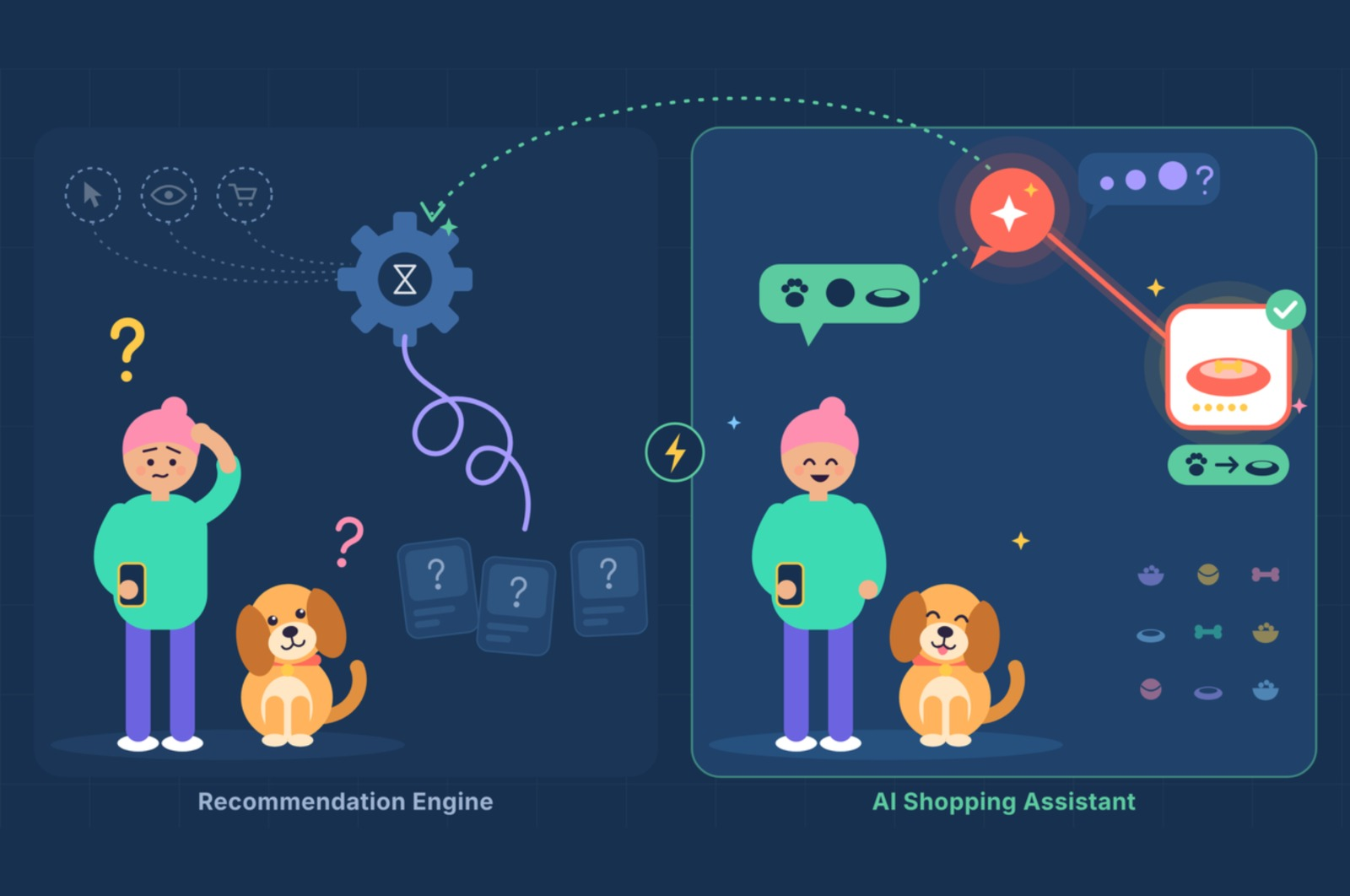
Because it starts from what the shopper says, not from past behavior, an AI shopping assistant works from the very first visit.
AI Shopping Assistant vs. Recommendation Engine
A recommendation engine learns from behavior such as clicks, views and past purchases, so it needs data before it can suggest anything useful and often struggles with new visitors or new products. An AI shopping assistant starts from stated intent: it asks what the shopper needs and matches products to those answers, even on the very first visit. The two work best together, because the assistant captures why someone is shopping and the engine can use that intent to sharpen every recommendation that follows.
What Can AI Assistants Do for Online Stores?
What can AI assistants do beyond recommending products? Quite a lot:
- Help undecided shoppers choose faster, especially for technical or high-value products.
- Capture zero-party data, the preferences shoppers share directly, for use in email, ads and personalization.
- Improve the results of recommendation engines by feeding them stated intent.
- Raise conversion and order value. Across its customers, Poltio reports an average 66% conversion lift for shoppers in guided flows and around 20% higher average order value.
For many merchants, an AI shopping assistant for shopify is the easiest starting point: it connects to the existing catalog and can be placed on product, category or campaign pages without rebuilding the store.
What Is the Best AI Shopping Assistant?
What is the best AI shopping assistant? The answer depends on your catalog and goals, but the strongest options share a few traits: fast setup with AI-drafted flows, live product sync, clear explanations for every recommendation, brandable design and full ownership of the data collected.
When planning an AI shopping assistant implementation, start small. Choose one category where shoppers struggle most, launch a short guided flow, and compare the conversion of shoppers who complete it with the category average. That single number usually shows the value an AI shopping assistant can bring to the whole store.