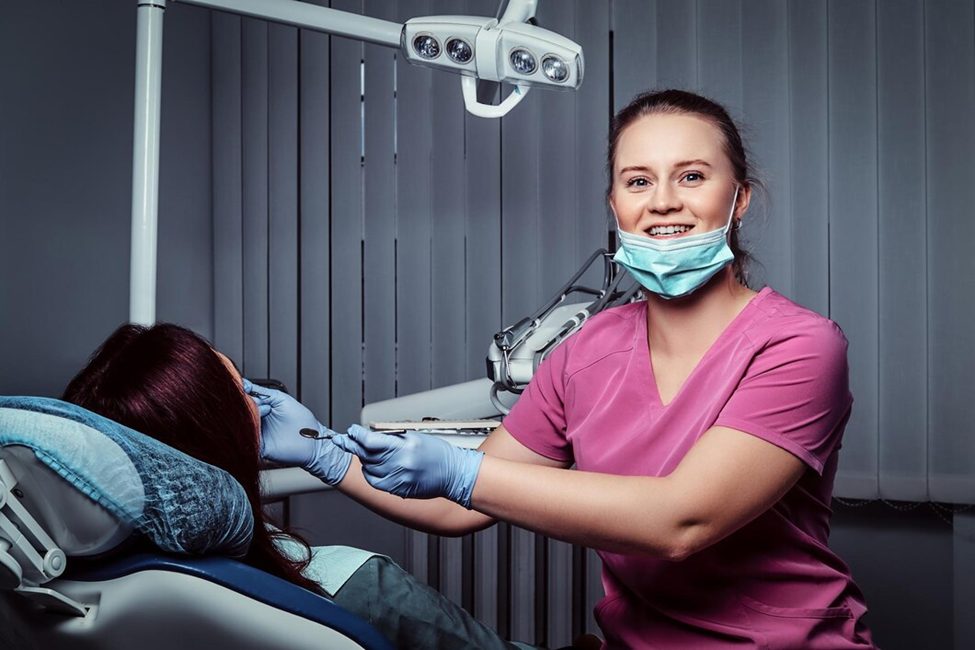
People researching dental careers usually end up comparing two paths first: dental assistant and dental hygienist.
On paper, they both work in dental offices. Both involve patient care. Both are in demand. And both can offer more stability than many traditional office jobs.
But the day-to-day reality of these roles is very different.
A lot of online comparisons soften those differences too much. They turn everything into “both are great careers,” which is not actually helpful if you are trying to decide where to invest your time and money.
The better question is not which role is “better.” It is about which trade-offs make more sense for your life right now.
Here is the honest breakdown people usually wish they had heard earlier.
1. Training Time and Cost Are Not Even Close
This is usually the first deciding factor for most people.
Becoming a dental assistant is typically much faster and less expensive than becoming a dental hygienist. Many assistant programs can be completed in under a year, and some people enter the field even faster through hands-on training pathways, depending on state requirements.
Dental hygiene programs are a much bigger commitment.
Most require an associate degree, competitive prerequisites, clinical hours, and licensing exams. Realistically, many students spend two to four years getting through the full process.
The financial difference matters too.
Hygiene programs often cost significantly more once tuition, instruments, exams, and lost working time are factored in.
That does not mean hygiene is a bad investment. It just means the barrier to entry is much higher.
For adults changing careers in their late 20s or 30s, that timeline alone becomes a major factor.
2. The Daily Work Feels Completely Different
This surprises people.
Dental assistants usually work in a fast-moving support role. The day involves preparing rooms, assisting during procedures, sterilizing instruments, documenting information, helping with patient flow, and constantly switching tasks.
You are moving a lot.
For some people, that variety makes the work feel energetic and engaging. Others find it mentally and physically draining after a while.
Dental hygienists, meanwhile, often spend longer periods focused one-on-one with patients.
The work is more repetitive clinically but also more independent. Hygienists perform cleanings, periodontal charting, patient education, and preventive care with less constant task-switching throughout the day.
One role feels more like multitasking inside a busy team environment.
The other feels more like managing a patient schedule independently.
Neither setup works for everyone.
3. Hygienists Usually Earn More But There Is a Catch
This is the part most career comparisons focus on immediately.
Yes, dental hygienists generally earn more than dental assistants.
But the gap needs context.
Hygienists often spend years and significantly more money reaching that income level. They also work in a role that can become physically demanding in a very specific way.
Long hours of repetitive posture, scaling work, wrist strain, neck pain, and back fatigue are extremely common in hygiene careers.
Several hygienists openly admit that the physical wear surprised them after a few years.
Dental assistants usually earn less overall, but the entry timeline is shorter and the job market is often easier to enter quickly.
For someone needing income sooner rather than later, that difference matters.
If the dental assistant path fits your situation, whether it is the shorter training time or the immediate job market demand, understanding what the role actually involves from day one is important before making the jump.
Resources from companies like GoTu have also made it easier for newer dental professionals to explore different office environments before committing long-term.
4. Schedule Flexibility Depends on the Office But Hygiene Often Wins
This is one area where hygienists often have more leverage.
Because licensed hygienists are in high demand in many regions, they can sometimes negotiate-
- Fewer workdays
- Part-time schedules
- Temp opportunities
- Higher hourly flexibility
Many hygienists work three or four days per week while maintaining strong income levels.
Dental assistants can absolutely find flexible schedules too, especially through temporary staffing platforms, but assistants are usually more tied to the operational flow of the office itself.
If a practice runs behind, assistants often feel that pressure first because they help coordinate so much of the day.
For people prioritizing long-term scheduling flexibility, hygiene may offer more control eventually.
5. Career Growth Looks Different for Both Paths
A lot of people assume hygienists automatically have stronger long-term career growth because the pay ceiling is higher.
That is partly true financially.
But dental assistants often have more flexibility moving into adjacent roles.
Assistants commonly transition into-
- Office management
- Treatment coordination
- Orthodontic assisting
- Surgical assisting
- Dental sales
- Training roles
- Staffing coordination
The role exposes people to many parts of dental office operations quickly.
Hygienists tend to remain more clinically specialized.
Some people love that. Others eventually want broader career movement and realize hygiene can feel limiting outside direct patient care unless additional education is pursued later.
The Better Choice Depends on What You Value Most
This is the part many comparison articles avoid saying directly.
If your priority is-
- entering the workforce faster
- lower training costs
- variety during the day
- easier entry into healthcare
Then dental assisting often makes more practical sense.
If your priority is-
- Higher long-term earning potential.
- more independent patient care.
- stronger schedule leverage.
- clinical specialization.
Then hygiene may be the better fit despite the longer educational path.
Neither role is “easy.” They are simply demanding in different ways.
Final Thoughts
The biggest mistake people make when comparing dental assisting and dental hygiene is assuming the decision comes down to salary alone.
In reality, the better fit usually depends on personality, financial situation, learning style, physical stamina, and how quickly someone wants to enter the workforce.
Some people thrive in the fast-moving, team-oriented nature of assisting. Others prefer the structure and independence that come with hygiene work.
The important thing is understanding the actual daily reality behind both jobs before committing time and money to either path.
That part matters far more than the polished marketing versions most career guides tend to repeat.