
If you’ve spent any time shopping for kilt accessories, you’ve probably encountered both terms — “kilt hose” and “kilt socks” — and assumed they’re either the same thing or different things. The reality is more nuanced than either assumption.
The two terms genuinely overlap in modern usage, but they signal different things about the product, the wearer, and the quality tier. A merchant who specifies “luxury kilt hose” is making a different statement than one selling “kilt socks.” A beginner shopping for “kilt socks” is usually entering the category at a different level than someone searching for “kilt hose.”
Understanding the distinction matters for shopping smart in 2026. Here’s the buyer’s guide that clarifies the terminology and walks through what to look for in luxury kilt hose specifically — the upper tier of this category that most kilt outfits eventually upgrade to.
The Terminology Distinction
The honest reality: “kilt hose” and “kilt socks” refer to the same garment, but the terms carry different connotations.
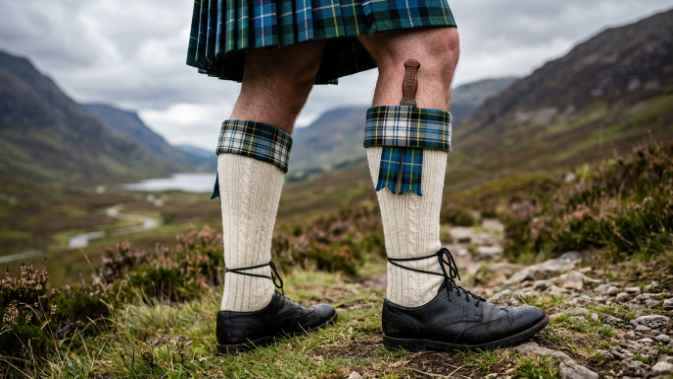
Kilt hose is the traditional Scottish terminology. The word “hose” historically referred to leg coverings ranging from socks to full breeches. In modern usage, “kilt hose” specifically means knee-high wool socks designed for wear with kilts. The term carries heritage weight and is the preferred terminology among:
- Scottish makers and retailers
- Pipe band members
- Heritage organization participants
- Traditional Highland dress wearers
Kilt socks is the more modern, accessible terminology. The term emerged as the kilt market expanded internationally and Scottish-specific vocabulary needed to be translated for non-Scottish buyers. “Kilt socks” is commonly used by:
- International retailers
- First-time kilt buyers
- Casual wearers
- Modern utility kilt and rock kilt wearers
The same product, different positioning. A merchant labeling their product “kilt hose” is generally signaling traditional craftsmanship and Scottish heritage. A merchant labeling the same product “kilt socks” is generally targeting accessibility and broader market appeal.
For most buyers, both terms work. For shopping with intent, “kilt hose” tends to surface higher-quality traditional options.
What Makes “Luxury” Kilt Hose
The luxury tier of kilt hose differs from standard tier in specific ways:
Wool quality:
- Standard: 70-80% wool blend with synthetic reinforcement
- Luxury: 100% pure wool, often from named Scottish mills (Lochcarron, House of Edgar)
Wool weight:
- Standard: Medium-weight (about 350g per pair)
- Luxury: Heavier, denser construction (400-500g per pair) for substantial drape
Knit complexity:
- Standard: Simple flat or basic ribbed knit
- Luxury: Complex cable knits, traditional patterns, or hand-finished decorative elements
Cuff construction:
- Standard: Machine-knit ribbed cuff
- Luxury: Hand-finished cuff with reinforced ribbing, sometimes with decorative tops
Heel and toe reinforcement:
- Standard: Basic reinforcement
- Luxury: Hand-stitched heel and toe with reinforced wear patterns
Length and fit:
- Standard: Standard small/medium/large sizing
- Luxury: Half-size sizing or custom-length options
Origin:
- Standard: International production
- Luxury: Scottish-made, sometimes hand-knitted
A quality luxury kilt hose pair typically costs $60-$120 in 2026, compared to $25-$50 for standard tier. The price difference reflects genuinely different construction quality and longer expected wear life.
When Luxury Kilt Hose Is Worth It
The upgrade from standard to luxury kilt hose makes sense for specific buyers:
Worth it for:
- Frequent kilt wearers (15+ events per year)
- Pipe band members or heritage organization participants
- Wearers attending photographic-significant events (weddings, formal portraits)
- Buyers who already own quality wool kilts and want matching accessories
- Long-term collectors building a heritage wardrobe
- Anyone who’s tried standard kilt socks and noticed limitations (slippage, pilling, pattern distortion)
Not worth it for:
- First-time kilt buyers still learning the basics
- Occasional wearers (1-3 events per year)
- Modern utility kilt or rock kilt wearers (luxury hose are typically traditional-styled)
- Buyers who haven’t yet established kilt-wearing as a lifelong wardrobe element
The smart progression: start with standard kilt socks for your first kilt experience. Upgrade to luxury kilt hose once you’ve established kilt-wearing as a real part of your life and want gear that performs better.
What to Look for in Luxury Kilt Hose
When shopping the luxury tier, verify these specifications:
Required for genuine luxury kilt hose:
- 100% pure wool fabric (no synthetic blends)
- Specified mill or origin (Scottish-made or named regional mill)
- Specified weight (in ounces or grams per pair)
- Hand-finished construction details
- Quality cuff structure
- Available in proper sizing (small, medium, large, with potential half-sizes)
- Reinforced heel and toe areas
- Specified knit pattern (cable, ribbed, fancy patterns)
Common upgrades in luxury construction:
- Diced cuff tops (the patterned section at the top of the fold)
- Decorative pattern integration (Argyle, cable, fancy ribbing)
- Hand-knit options
- Complementary garter flash recommendations or matched pairs
- Storage bag or quality packaging
The product description should specify these elements clearly. Vague descriptions like “high-quality wool kilt hose” without specifications usually mean standard-tier products with luxury pricing — avoid.
A genuine luxury kilt hose pair will have detailed product specifications, photos showing construction details, and clear positioning about why it’s luxury versus standard.
Color Choices for Luxury Hose
Luxury kilt hose come in colors beyond the standard cream and charcoal:
Most versatile (recommended for first luxury pair):
- Cream / off-white (most universally appropriate)
- Charcoal grey (smarter alternative for evening events)
Specialty luxury colors:
- Forest green (works with darker tartans like Black Watch)
- Burgundy or wine (statement choice for ceremonial occasions)
- Plain black (very specific use cases — military or modern)
- Heather mix tones (modern alternative styling)
Reserved for uniforms:
- Pure white (military, pipe band)
- Specific regimental colors
For luxury hose specifically, the cream and charcoal options remain the most practical first purchases. Specialty colors are for established kilt-wearers who already have the basics covered and want variety.
How Luxury Kilt Hose Performs Differently
Beyond aesthetics, luxury construction affects performance:
Drape and fit:
- Heavier wool weight creates more substantial drape down the leg
- Better fit means less slippage during wear
- Reinforced areas resist sagging and bunching
Photographic quality:
- Higher wool quality absorbs light correctly
- Pattern depth shows in photographs
- No plastic sheen or synthetic appearance
Longevity:
- Quality wool naturally regenerates between wears
- Hand-finished reinforcement points resist wear
- A good luxury pair lasts 8-15 years of regular use
Comfort over long events:
- Better breathability of pure wool
- Less itching for sensitive wearers
- Maintained shape throughout 8+ hour events
The performance difference is genuinely meaningful, especially for wearers who use kilts at long events or in challenging weather conditions.
Care for Luxury Kilt Hose
Luxury hose require slightly more careful maintenance than standard versions:
Required care:
- Hand-wash only in cold water with wool-specific detergent
- Lay flat to dry, never tumble dry
- Block to original shape during drying
- Store with cedar or lavender for moth protection
- Avoid hanging (causes stretching)
Specific to luxury construction:
- Don’t use harsh detergents or fabric softeners
- Spot-clean immediately for any spills
- Avoid wearing while sweating heavily (sweat damages wool over time)
- Air out between wears rather than washing after every use
Done correctly, luxury kilt hose maintain their structure and appearance for a decade or more. Done carelessly, they can be ruined within a single wash cycle.
Building a Hose Collection Strategy
The smart progression for serious kilt wearers:
Year 1: Standard tier basics
- 1 pair cream wool kilt socks (universal)
- Garter flashes in red
- Total: $30-$60
Year 2: First luxury upgrade
- 1 pair luxury cream kilt hose (replace standard)
- Continue using same flashes
- Total adds: $60-$100
Year 3-5: Expanded collection
- Add 1 pair luxury charcoal kilt hose
- Add additional flash color (matched to specific tartans)
- Total adds: $80-$130
Year 5+: Mature collection
- Add specialty colors or patterns
- Replace standard pairs as they wear out
- Match heritage-level construction across all pieces
A complete luxury kilt hose collection rarely exceeds $300 total spread across years and lasts dramatically longer than equivalent investment in standard pairs.
Frequently Asked Questions
Are kilt hose and kilt socks completely interchangeable?
Functionally yes. The terminology difference is more about positioning and quality tier expectation than product distinction.
Should my first pair be standard or luxury?
Standard for beginners. Spend money on the kilt itself first, then upgrade the hose once you’ve established kilt-wearing as part of your life.
Can luxury kilt hose work with modern utility kilts?
Generally no. Luxury hose are traditional styling. Modern utility kilts pair better with simpler hose or even regular athletic socks for daily wear.
How do I know if a product is genuinely luxury versus marketing fluff?
Look for specific construction details in the product description: wool weight, mill source, hand-finished elements, knit pattern. Vague descriptions = standard tier with marketing language.
Will luxury hose work in hot weather?
Luxury wool actually breathes better than cheap blends, making it more comfortable in moderate heat. Above 80°F, lighter-weight luxury hose perform better than heavyweight options.
Are luxury kilt hose worth it for occasional wearers?
Probably not. The performance benefits show up most over many wears. For 1-3 events per year, standard hose are usually sufficient.
Kilt hose and kilt socks are functionally the same product but signal different positioning in the market. Standard kilt socks are the right starting point for first-time kilt buyers. Luxury kilt hose are the upgrade for established wearers who want construction quality matching their kilts. Whichever term you search for, the core requirements are the same: pure wool, knee-high length, structured cuff, and proper sizing. Get those basics right and your kilt outfit reads professionally, regardless of what the label says.