Perfection rarely begins peacefully. Beneath the Earth’s surface, at depths where the planet’s heart beats with molten fury, diamonds crystallize under conditions that would obliterate anything familiar to surface life. The temperatures exceed those of most industrial furnaces. The pressure crushes with a force measured in hundreds of thousands of pounds per square inch.
This is no gentle process. This is creation through extremity, beauty forged in the planet’s furnace. And when these crystals must return to the surface, when they must complete their journey from the depths to human hands, they do so through violence: volcanic eruptions of spectacular intensity.
The story of how a Blue Diamond travels from its formation zone to a velvet-lined jewelry box is one of the most remarkable transformation narratives in nature.
The Deep Formation Zone
Diamond formation occurs in the Earth’s mantle, primarily between 90 and 250 miles below the surface. At these depths, carbon exists under pressure roughly one million times greater than atmospheric pressure at sea level. The temperature ranges from 1,650 to 2,370 degrees Fahrenheit.
Under these extreme conditions, carbon atoms arrange themselves into the most efficient, stable structure possible: the cubic crystal lattice we recognize as diamond. This isn’t a quick process. Diamond formation takes millions to billions of years, as carbon atoms slowly find their perfect positions within the growing crystal.
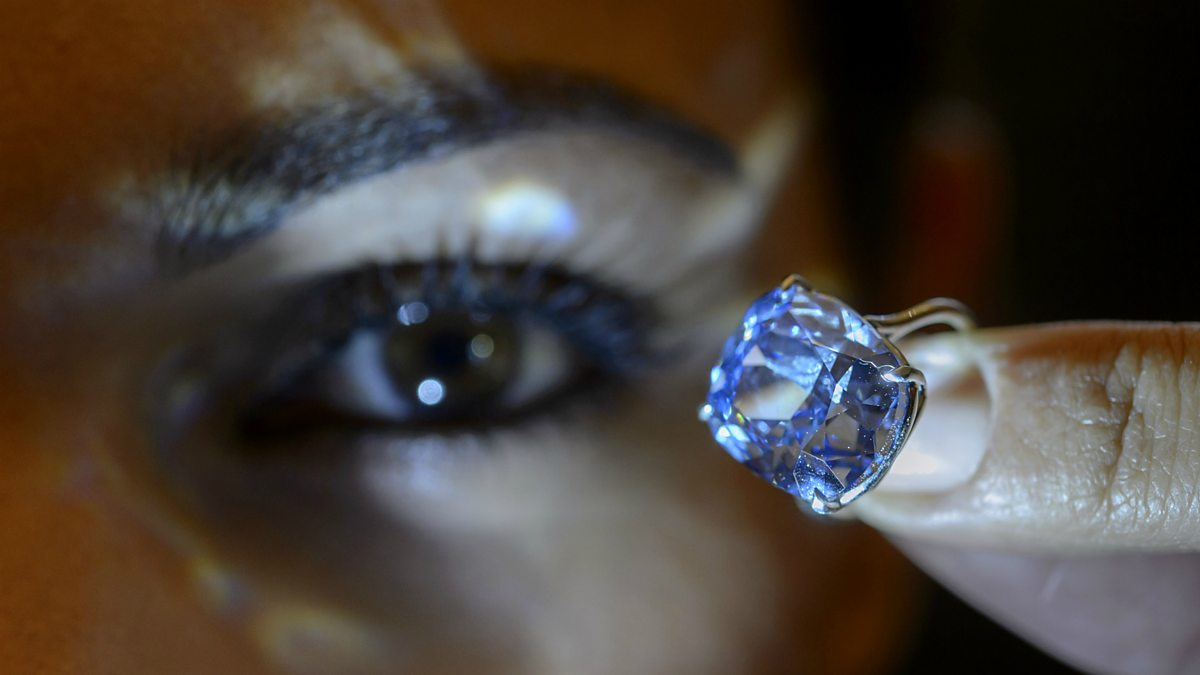
For a diamond to develop that characteristic blue coloration, boron must be present during formation. This element, normally found near Earth’s surface, makes its way into the mantle through plate tectonic processes. When boron atoms substitute for carbon atoms in the crystal lattice, they create the conditions that give the stone its mesmerizing hue.
The Kimberlite Express
Diamonds can’t walk to the surface. They need transportation, and nature provides it through kimberlite eruptions. These volcanic events are fundamentally different from the lava flows we typically associate with volcanoes.
Kimberlite eruptions are explosive, violent, and incredibly fast. Magma shoots upward from the mantle at speeds that can exceed 250 miles per hour, carrying diamonds and other mantle materials with it. This rapid ascent is crucial. If the journey took too long, if the diamonds spent extended time at intermediate temperatures, they would convert back into graphite, their stable form at lower pressures.
The eruption creates a carrot-shaped pipe of rock extending from the mantle to the surface. These kimberlite pipes are the primary source of natural diamonds. They’re scattered across the globe, though concentrated in specific regions: South Africa, Russia, Canada, Australia, and a few other locations where geological conditions were just right.
Most kimberlite eruptions happened long ago, during earlier periods of Earth’s geological history. The most recent occurred around 25 million years ago. We’re living in a relatively quiet period, unlikely to witness new diamond-bearing eruptions in our lifetimes.
From Violence to Velvet
The contrast is striking. A stone born in infernal conditions, ejected through volcanic violence, travels through countless human hands before coming to rest in a velvet-lined box. The journey spans billions of years and thousands of miles, from depths we can barely imagine to display cases we can barely afford.
Yet that contrast is part of the appeal. We value blue diamonds not despite their violent origins but partially because of them. They represent transformation, the conversion of chaos into order, of pressure into beauty, of geological accident into treasured artifact.
The Story Continues
Each blue diamond carries its complete history within its crystal structure. Scientific analysis can reveal the stone’s age, its formation conditions, even the composition of the mantle material that surrounded it during crystallization. These aren’t just pretty rocks; they’re geological documents, records written in carbon and boron that tell us about our planet’s deep past.
When someone places a blue diamond ring on their finger, they’re wearing a piece of Earth’s mantle, processed by forces beyond human comprehension, brought to the surface through volcanic fury, and refined by human skill into something beautiful.
The journey from volcanic violence to velvet boxes represents one of nature’s most extraordinary transformation stories. It reminds us that the most treasured things often have the most tumultuous origins, and that perfection, when it arrives, arrives through fire and pressure and time and, occasionally, volcanic explosions of tremendous power.