Ask a parent what skills they most want their child to develop before leaving home, and you’ll hear variations of the same list: independence, patience, creativity, the ability to follow through on something difficult, confidence in their own judgment. Now ask those same parents how many of those qualities can be developed in an afternoon in a kitchen, and you’ll often get a surprised pause.
Cooking is, on its surface, a practical skill. But the kitchen is also one of the most comprehensive learning environments a child can inhabit — one where the lessons are immediate, the feedback is honest, and the reward for effort arrives warm on a plate.
The patience problem — and how a kitchen solves it.
One of the persistent frustrations of raising children in a time of instant digital gratification is the atrophying of patience. The feedback loops children are most accustomed to — a tap, a swipe, a like — are measured in milliseconds. The feedback loop in cooking operates on a different timescale entirely. Bread dough needs to rest. Caramel cannot be rushed. A sauce reduced too quickly will scorch; one given time will develop layers of flavor that weren’t there when it started.
For a child who is used to immediate results, learning to wait for something — and discovering that the waiting was the point — is a quietly powerful lesson. The croissant that took an hour to laminate and shape tastes different to the child who made it than any croissant they have ever eaten. That difference is patience, made edible.
Failure as a feature, not a flaw.
Very few things a child attempts in a kitchen work perfectly the first time, and this is one of its greatest gifts as a learning environment. A collapsed soufflé, a burned bottom on a cake, dumplings that stick and tear when you try to fold them — these are not disasters. They are data. The kitchen teaches children that failure is not a final verdict but a piece of information, and that the response to failure is to adjust, try again, and stay curious about why things went the way they did.
This is a harder lesson to absorb from a classroom setting, where mistakes have grades attached and social visibility. In a kitchen, especially when cooking alongside an encouraging adult or a skilled instructor, failure is just part of the process — and moving through it builds a kind of resilience that transfers to everything else.
The mathematics and science hiding in plain sight.
Long before a child understands what a ratio is, they learn in the kitchen that the proportion of fat to flour to liquid determines whether a dough is pastry, pasta, or bread. They learn that heat changes the molecular structure of protein, that acid brightens flavor, that fat carries it. They learn fractions when they halve a recipe and multiplication when they double one. They measure, they estimate, they notice when something looks right and when it doesn’t.
Cooking is applied science and applied mathematics in a context where the results are genuinely meaningful to the child performing them. Abstract concepts that resist engagement on a worksheet become vivid and memorable when they’re the reason a cookie spreads or a custard sets.
Reading, following instructions, and trusting the process.
A recipe is a technical document. Following it requires careful reading, sequencing, attention to detail, and the discipline to complete one step before moving to the next. Children who cook regularly develop a relationship with written instruction that is different from passive reading — they are reading in order to act, in the correct order, with real consequences if they skip ahead or misread a measurement.
This is exactly the kind of active, engaged literacy that supports success in virtually every domain where written instructions matter, which is to say: most of them.
What cooking with adults teaches that cooking alone cannot.
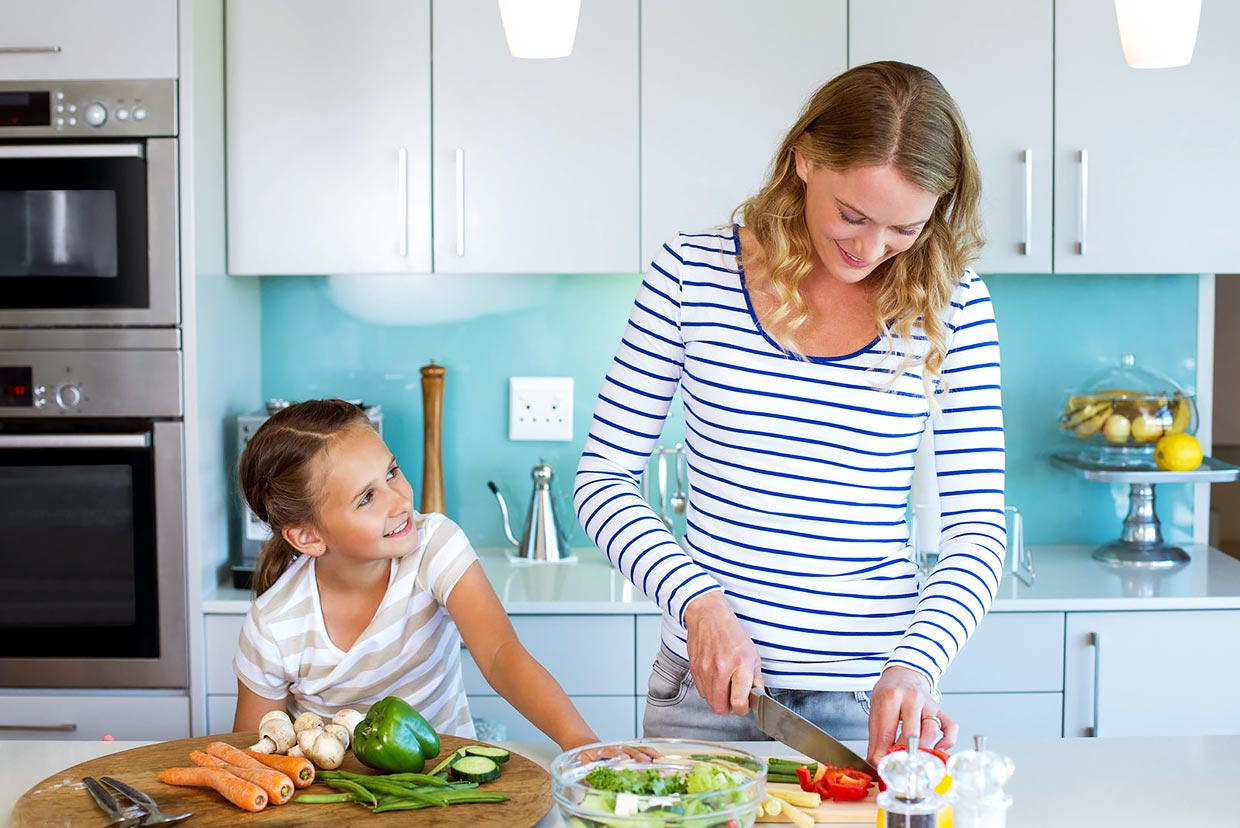
There is a dimension to culinary learning that instruction videos and cookbook pages cannot fully provide, and it is the dimension of relationship. A child cooking alongside a parent, grandparent, or professional chef is learning not just technique but presence — how to be in the same space with another person, focused on a shared task, communicating about what’s happening in real time. The conversation that happens over a cutting board or in front of a hot stove is a particular kind of conversation: unhurried, purposeful, honest.
A chef club environment that brings children into a professional kitchen under the guidance of experienced instructors adds another layer — the experience of working within a structured context, with real equipment, real ingredients, and real expectations. The child leaves not just with a certificate and a recipe card but with the memory of having done something genuinely skilled, under real conditions, and having it come out well.
The confidence that comes from feeding someone.
There is a specific kind of confidence that comes from putting food in front of another person and having them enjoy it. It is different from the confidence of winning a competition or receiving praise for an essay. It is the confidence of having made something useful, nourishing, and pleasurable out of raw materials and skill. For children who struggle to find their footing in more conventional achievement contexts, the kitchen can be the place where that footing first appears.
What teaching a child to cook actually teaches them about life is, in the end, what the kitchen has always taught everyone who has worked in one: that effort produces results, that care changes things, that what you make with your hands is yours in a way that nothing else quite is.