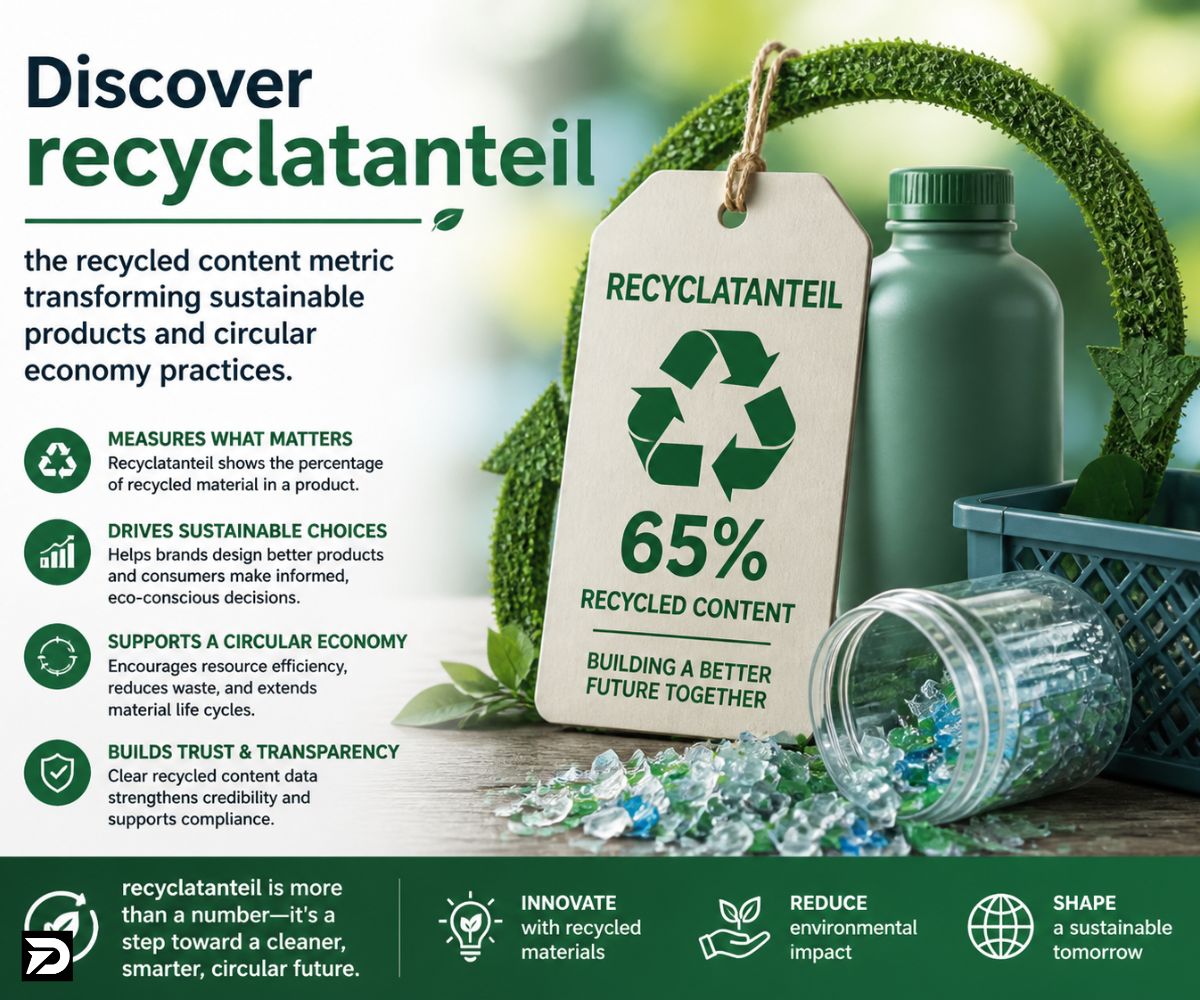
Sustainability has become a central concern in both consumer awareness and corporate strategy. One important concept in sustainable manufacturing is recyclatanteil, which measures the proportion of recycled material in a product. Understanding this metric helps evaluate a product’s environmental impact and supports informed decisions by both businesses and consumers.
What is Recyclatanteil?
Recyclatanteil represents the percentage of a product composed of recycled material. It can include post-consumer materials collected from previous products or post-industrial by-products from manufacturing processes. This measurement focuses on the material incorporated into new products, providing a clear indicator of environmental responsibility.
Key Aspects
- Material source: Differentiates between recycled post-consumer and post-industrial content.
- Product focus: Applies to packaging, textiles, plastics, metals, and other manufactured goods.
- Sustainability metric: Reflects the use of recycled materials in production.
Difference Between Recyclatanteil and Recycling Rate
While recyclatanteil indicates the recycled content in new products, the recycling rate measures how much material is collected and processed after use. A product may have a high recycling rate but low recycled content if most new items still use virgin materials. This distinction helps clarify the impact of material reuse in product design.
Why Recyclatanteil Matters for Sustainability
Increasing the recycled content in products reduces reliance on virgin resources, lowers energy consumption, and minimizes greenhouse gas emissions. It supports a circular economy by keeping materials in use longer and encourages manufacturers to adopt sustainable practices. For businesses, it also offers a tangible way to demonstrate environmental responsibility.
How Recyclatanteil is Measured
Measuring the recycled content of a product involves:
- Identifying eligible materials for recycled content.
- Weighing the recycled portion of those materials.
- Calculating the percentage relative to the total product weight.
Standards and certifications often provide guidance to ensure consistent and credible measurements.
Industry Applications of Recyclatanteil
Packaging
Recycled content in packaging reduces resource extraction and waste. Bottles, boxes, and wrappers with significant recycled material show practical steps toward sustainability. Labeling the percentage of recycled content informs consumers and demonstrates corporate commitment.
Automotive
Vehicle interiors and components increasingly use recycled plastics, metals, and textiles. This approach helps reduce production emissions and supports regulatory compliance while appealing to environmentally conscious consumers.
Textiles
Textile manufacturers incorporate recycled fibers to reduce waste, conserve water, and limit chemical usage. Fabrics made with recycled content contribute to sustainable production and align with circular economy principles.
Regulatory and Corporate Perspectives
Regulatory bodies in many regions encourage the use of recycled materials in products. Companies report recycled content percentages in sustainability disclosures to demonstrate compliance and commitment. Clear measurement and reporting help build trust with consumers and stakeholders.
Challenges in Increasing Recyclatanteil
- Material quality: Maintaining performance with higher recycled content can be challenging.
- Supply limitations: Consistent sourcing of high-quality recycled materials is not always feasible.
- Perception: Consumers may question product quality.
- Regulatory variation: Rules for recycled content labeling differ by jurisdiction.
Addressing these challenges requires collaboration, innovation, and transparency.
Tips for Consumers and Businesses
For Consumers
- Check product labels for recycled content percentages.
- Choose brands committed to incorporating recycled materials.
- Encourage transparency in sourcing and production.
For Businesses
- Set measurable goals for recycled content.
- Ensure reliable supply chains for recycled materials.
- Communicate initiatives clearly to customers.
- Collaborate across industries to share best practices.
Conclusion
Recyclatanteil is a crucial metric for sustainable production. It provides insight into how much recycled material is used in products and helps guide both business decisions and consumer choices. By increasing recycled content, companies reduce environmental impact, support circular economy principles, and demonstrate tangible commitment to sustainability.
FAQs
1. What does recyclatanteil mean? It is the proportion of recycled material incorporated into a product.
2. How does it differ from recycling rate? Recycling rate measures the percentage of material collected and processed, while recyclatanteil measures the recycled content in new products.
3. Why is it important? It reduces reliance on virgin resources, lowers emissions, and supports circular economy practices.
4. How can consumers identify products with recycled content? Consumers should look for labels indicating the percentage of recycled materials used.
5. Which industries commonly use recycled content? Packaging, automotive, and textiles are among the industries incorporating recycled materials.