Introduction
Most American households include pets, and cat owners increasingly want to give indoor cats safe access to fresh air. Letting a cat roam freely exposes it to traffic, predators, disease, and the loss of local wildlife, while keeping it strictly indoors can limit stimulation. A wooden outdoor catio resolves this by providing an enclosed outdoor space where a cat can climb, watch, and rest in safety. Homeowners, renters with patios, and animal shelters use these enclosures to enrich a cat’s day without the risks of free roaming.
What a Catio Is and Why It Helps
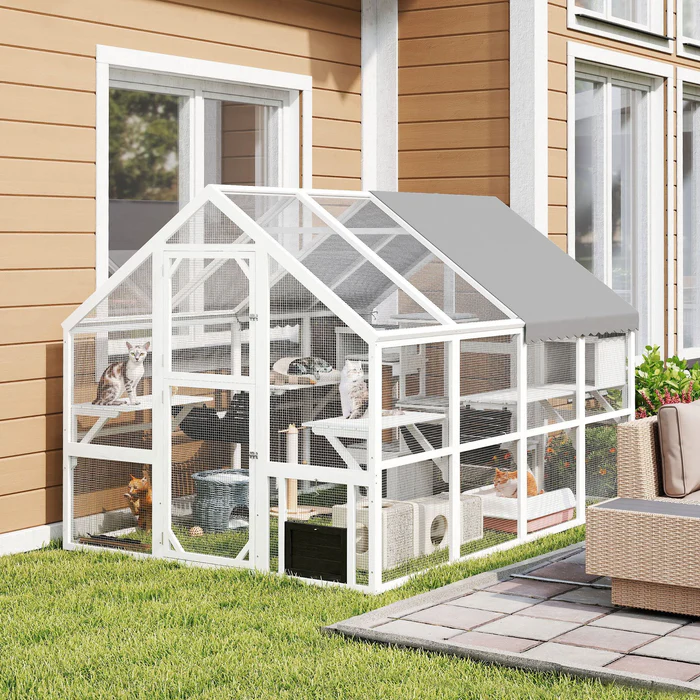
A catio is a screened or wire-enclosed structure that gives a cat the experience of being outdoors while preventing escape and keeping hazards out. It addresses several problems at once. The cat gains sunlight, fresh air, and sensory enrichment that reduces boredom and related behavior issues. At the same time, songbirds and small wildlife are protected from hunting, and the cat is shielded from vehicles, larger predators, and the fights that spread disease. Veterinary and wildlife groups have long encouraged this kind of contained access for these reasons.
Construction and Materials
Most of these enclosures pair a wooden frame with wire mesh. The wood provides the structure and a natural appearance that suits a garden or patio, while welded or woven mesh encloses the space without blocking airflow or views. Mesh spacing should be small enough that a cat cannot push through or catch its head. Joints and seams are built to leave no gaps, since a determined cat will test every edge.
Design for Wellbeing
A good catio is more than an empty box. Cats prefer height, so shelves, ramps, and perches at different levels let them climb and survey their surroundings. A shaded area and a sheltered spot protect against sun and rain, and a soft resting place encourages use. Including a mix of sun and shade lets the cat choose its own comfort through the day. Familiar items such as a scratching post or a favorite bed help the cat treat the space as its own.
Weather Protection
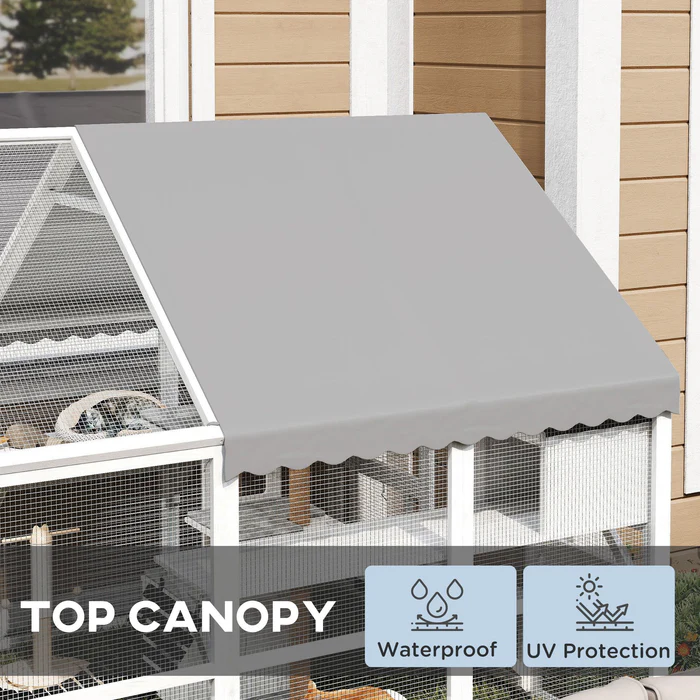
Because the structure sits outdoors, the wood needs protection from moisture. A weather-resistant species or a sealed and treated finish slows rot and insect damage. A sloped or covered roof sheds rain and adds shade, and raising the base off wet ground further extends the life of the timber. Periodic resealing keeps the wood sound over the years. Good drainage beneath the floor keeps the interior dry after rain.
Placement and Access
Catios are often attached to a house so the cat can pass through a window or pet door, which removes the need to carry the animal outside. Freestanding units suit gardens and patios where no direct access is available. A human-sized door makes cleaning and maintenance easier, and positioning the enclosure where the household spends time encourages the cat to use it.
Security and Escape Prevention
Containment is the core function, so latches and closures deserve attention. Spring-loaded or lockable latches resist a cat’s pawing, and a double-door entry can prevent a dash for freedom during cleaning. The same barriers that keep the cat in also keep threats out, so secure mesh and a solid base discourage predators and other animals from digging or pushing their way in.
Safety and Maintenance
The points below are general guidance and do not replace veterinary advice or the manufacturer’s instructions:
· Provide constant access to shade, shelter, and fresh water
· Check latches, mesh, and seams regularly for wear or gaps
· Keep the enclosure clean to limit parasites and odor
· Never leave a cat in extreme heat or cold
· Inspect and reseal the wood as needed to prevent rot
Advantages and Limitations
Advantages:
· Safe outdoor access and enrichment for the cat
· Protects local birds and wildlife from hunting
· Reduces exposure to traffic, predators, and disease
· Natural wooden appearance suits a garden
Limitations:
· Wood needs sealing and upkeep over time
· Requires space and a suitable location
· Attached units may need a pet door installed
· Larger enclosures take effort to assemble
Industry Outlook
As awareness of both cat welfare and wildlife protection grows, interest in outdoor pet enclosures continues to rise among owners who want a middle path between indoor confinement and free roaming. Makers are offering modular panels, window attachments, and weatherproof designs that are easier to install. Buyers should match the size, access method, and materials to their space and climate, since an enclosure suited to a mild patio will need more shelter to serve through a harsh winter.