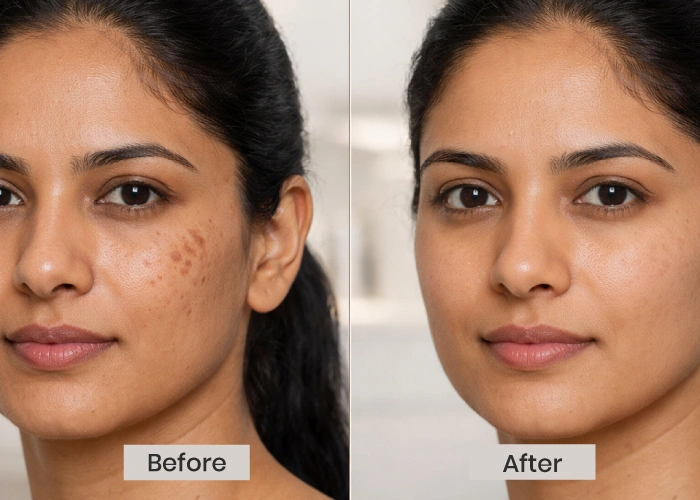
Pigmentation rarely behaves the exact same way twice. Some patches lighten gradually over months without any intervention, quietly fading back into the surrounding skin tone. Others remain stubbornly visible for years, seemingly unaffected by time or daily skincare routines. Understanding why this difference exists offers a genuinely useful way to think about skin before jumping straight to treatment.
The Skin’s Natural Turnover Process
Skin renews itself constantly, shedding surface cells and replacing them with new ones from underneath. This turnover process plays a significant role in whether pigmentation fades naturally. Patches sitting closer to the surface are more likely to lighten over time as cells shed and get replaced, gradually carrying pigment away with them. Deeper pigmentation sits below this active renewal zone, making natural fading far less likely without additional support.
This is one of the clearest explanations for why two patches on the same face can behave so differently. A superficial patch caused by recent, mild sun exposure may fade within several months as part of ordinary turnover. A deeper patch, especially one influenced by hormonal changes or older sun damage, often sits beyond the reach of this natural process entirely.
The Role of Ongoing Triggers
Fading also depends heavily on whether the original trigger continues. Sun exposure is the most common ongoing trigger, and pigmentation exposed to continued unprotected sunlight has little opportunity to fade, regardless of how superficial it started out. Patches that stop receiving fresh stimulation are far more likely to lighten gradually, since the skin is no longer prompted to produce additional pigment in that area.
Hormonal pigmentation follows a similar pattern. Patches linked to hormonal fluctuations sometimes fade once those fluctuations settle, while others persist well beyond the original trigger because the pigment became established so deeply during the active period. This inconsistency reflects genuine differences in depth, trigger duration, and how the skin responded during formation.
What This Means Before Considering Treatment
Understanding these factors helps set realistic expectations before pursuing any treatment option. A patch that has remained unchanged for several years despite consistent sun protection is behaving very differently from one that appeared recently and may still be in an active fading phase. Recognizing this distinction prevents both premature frustration and unnecessary treatment for something that may have resolved on its own with a bit more time.
Professionals offering pigmentation treatment Adelaide patients trust often begin consultations by asking how long a patch has been present and whether it has changed at all, since this history reveals far more than appearance alone. A patch’s age and behavior over time often say more about the right approach than its current color or size.
A More Patient Way to Watch and Wait
Recognizing why some pigmentation fades and other patches persist offers a more patient, informed way to approach skin concerns. Rather than assuming every patch requires immediate intervention, understanding depth, triggers, and natural turnover allows for a more measured response, one based on genuine behavior observed over time rather than appearance in any single moment.