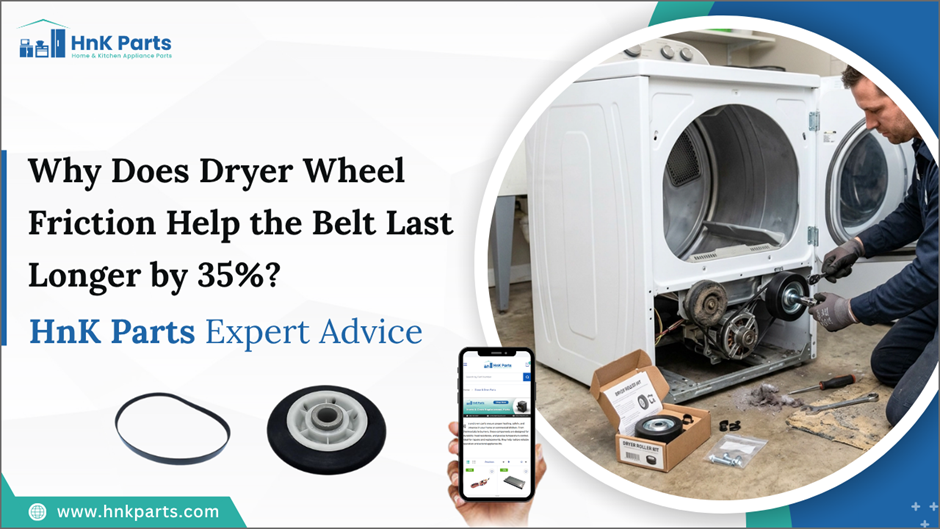
Modern dryers rely on several moving components working together smoothly to deliver efficient drying performance. Among the most important components are the dryer belt and support wheels, which help rotate the drum consistently during every cycle. According to appliance maintenance experts, properly balanced dryer wheel friction can help extend belt life by as much as 35% by reducing strain, slippage, and uneven drum movement. Understanding how these dryer parts function together can help homeowners prevent breakdowns, reduce repair costs, and improve appliance performance over time.
Understanding the Role of Dryer Wheels and Belts
The dryer belt is responsible for turning the drum during operation. It wraps around the drum and connects to the motor pulley, allowing the drum to rotate while clothes tumble evenly. However, the belt cannot perform efficiently on its own. Support wheels, also known as drum rollers or dryer wheels, help stabilize the drum and reduce unnecessary resistance during rotation.
When dryer wheels maintain proper friction levels, they allow the drum to spin smoothly without creating excessive drag. Balanced friction helps prevent belt slipping, overheating, and premature wear. If the wheels become damaged, misaligned, or excessively worn, the belt experiences added tension that can shorten its lifespan significantly.
How Proper Friction Reduces Belt Wear
Many homeowners assume friction always damages appliance components, but controlled friction actually plays an important role in dryer performance. Proper wheel friction creates stable drum movement that helps distribute mechanical load evenly across the dryer belt.
Prevents Belt Slippage
If dryer wheels become too loose or worn, the drum may wobble or rotate unevenly. This instability causes the belt to slip repeatedly, increasing heat buildup and accelerating belt deterioration.
Reduces Motor Strain
Balanced wheel friction allows the motor to rotate the drum more efficiently. Reduced resistance lowers stress on both the motor and the belt system, contributing to longer component life.
Maintains Drum Alignment
Support wheels help keep the drum centered during operation. Proper alignment prevents the belt from stretching unevenly or rubbing against surrounding components.
By maintaining healthy wheel friction and drum stability, homeowners can help improve overall dryer reliability and extend the life of critical moving parts.
Common Signs of Dryer Wheel Problems
Dryer wheel issues often develop gradually, making early detection important for preventing costly repairs. Ignoring these warning signs can eventually lead to belt failure or motor damage.
Squeaking or Grinding Noises
Worn support wheels commonly produce squealing, grinding, or rumbling sounds during dryer operation. These noises usually indicate bearing wear or uneven wheel movement.
Drum Rotation Problems
If the drum struggles to turn smoothly or stops rotating completely, damaged wheels or a worn belt may be responsible.
Burning Smells
Excessive friction caused by failing wheels can create heat buildup that produces a burning rubber odor. This often signals added stress on the dryer belt.
Uneven Drying Performance
When the drum does not rotate properly, clothing may dry unevenly because airflow and tumbling efficiency become disrupted.
Addressing these symptoms early can help avoid major appliance breakdowns and extend the lifespan of both belts and support components.
Maintenance Tips to Extend Dryer Belt Life
Proper maintenance plays a major role in preserving dryer performance and minimizing wear on moving parts. HnK Parts experts recommend several simple maintenance practices to improve belt longevity.
Inspect Support Wheels Regularly
Checking dryer wheels for cracks, flat spots, or excessive wobbling can help identify problems before they damage the belt.
Clean Lint Buildup
Excess lint around moving components can increase resistance and overheating. Regular cleaning improves airflow and reduces unnecessary strain.
Avoid Overloading the Dryer
Heavy loads place additional pressure on the drum, wheels, and belt system. Operating the dryer within recommended capacity limits helps reduce wear.
Replace Worn Components Promptly
Replacing damaged support wheels early can prevent additional stress on belts, motors, and pulleys.
Consistent maintenance helps improve appliance efficiency while reducing the likelihood of unexpected repairs.
Why Quality Replacement Parts Matter
Using high-quality replacement components is essential for maintaining reliable dryer operation. Inferior belts or support wheels may wear faster, create excess friction, or fail prematurely under regular use.
HnK Parts provides dependable appliance replacement components designed to support long-term dryer performance. Choosing reliable replacement parts helps ensure smoother drum rotation, better belt stability, and improved appliance efficiency.
Properly functioning dryer wheels and belts work together to create balanced movement that protects critical components from excessive strain. Investing in reliable repairs and regular maintenance can help homeowners extend appliance lifespan, reduce downtime, and improve drying performance.
For homeowners searching for dependable repair solutions and quality kitchen appliance parts, maintaining dryer wheel friction and replacing worn components at the right time can make a significant difference in long-term appliance reliability.