The Limitations of Monolithic LLM Architectures
A single large language model can draft a stellar marketing email or summarize a dense legal brief in seconds. Yet, expecting that same isolated model to manage a complex supply chain crisis or run an entire enterprise customer support division reveals a massive operational ceiling. When pressed with multi-layered, multi-departmental corporate workloads, individual models frequently stumble over context limits, experience reasoning decay, or simply hallucinate answers when memory thresholds are exceeded.
The structural flaw lies in forcing a single system to be an expert at everything all at once. Enterprise AI scaling fails when systems rely entirely on massive, single-string prompts trying to control dozens of interconnected software tools. There are studies showing that breaking large computational problems into smaller, isolated components reduces error rates significantly while improving execution reliability. Relying on an isolated cognitive architecture creates data processing bottlenecks, making it incredibly difficult to manage volatile, shifting company ecosystems.
What is a Multi-Agent Orchestration Framework
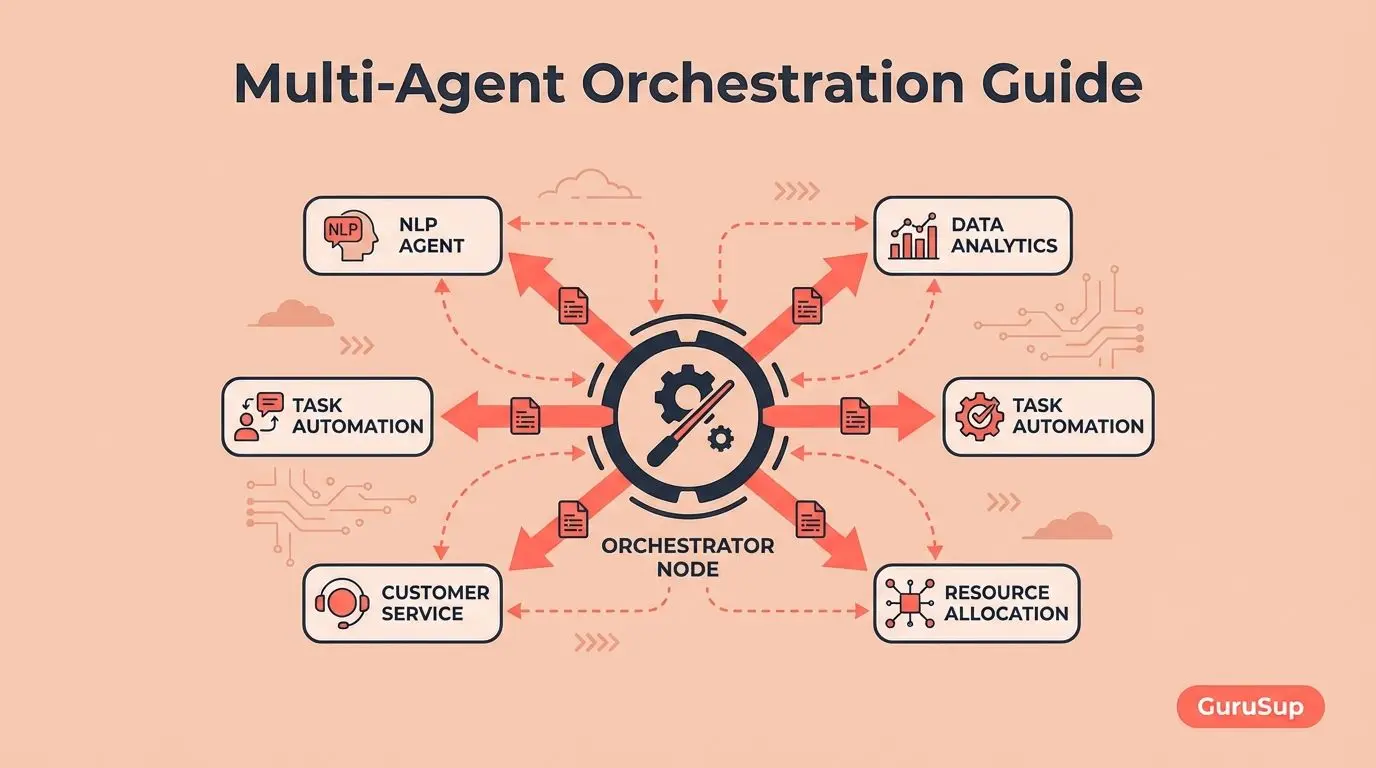
The enterprise paradigm shifts completely when organizations move away from single prompts and implement collaborative networks. Instead of one massive system trying to guess the correct output, a framework coordinates multiple autonomous AI agents that possess specialized roles, individual memories, and distinct access privileges. These setups use task decomposition to slice major corporate initiatives into bite-sized, executable assignments that specialized units handle simultaneously.
Think of it as moving from an individual freelancer to an elite, highly coordinated corporate department. Popular open-source ecosystems like LangChain, CrewAI, and AutoGen demonstrate how individual digital specialists can communicate, critique each other, and hand off tasks smoothly. This specialized approach ensures that complex LLM workflows operate like a professional team, combining isolated reasoning paths into a unified, accurate corporate output.
Architectural Advantages for Enterprise Infrastructure
Transitioning away from brittle linear prompting to multi-agent ecosystems unlocks immense scalability across enterprise AI infrastructure. When engineering groups build decentralized networks, they create resilient software environments capable of self-correction and autonomous tool usage. Implementing modern agentic AI development guarantees that if one specific automated agent hits an API timeout, the surrounding network dynamically reroutes the project to maintain operational continuity.
Building out this level of advanced automation requires highly specialized engineering expertise to avoid creating vast technical debt. Organizations looking to expand their technological capabilities regularly leverage professional agentic AI services to integrate these cognitive layers into legacy databases seamlessly. Partnering with elite engineering teams like Beetroot ensures that companies deploy secure, production-grade automated agent networks that scale efficiently.
For businesses focusing on customer-facing web solutions, ensuring your underlying applications run at maximum capacity is equally vital. Implementing specialized infrastructure consulting or seeking targeted assistance from engineering hubs helps guarantee that your digital interfaces communicate with backend AI models smoothly. Adopting a multi-agent framework delivers measurable strategic advantages:
- Minimizing token expenditures by utilizing smaller, specialized models instead of triggering massive, expensive models for simple tasks.
- Empowering discrete digital workers to execute custom code scripts and interact with enterprise databases safely.
- Reducing hallucination rates by forcing automated peer-review processes between separate agents before presenting final data.
- Enabling effortless horizontal scaling as companies add new specialized digital teams to manage expanding operational needs.
- Simplifying long-term system maintenance since engineers modify individual agent behaviors without rewriting the entire organizational architecture.